From Student to Teacher: Where MEDLIFE's Field Education Philosophy Began
The same field-study tradition that shaped a student shaped the organization he would go on to build — and the educator he would become.
The origin
How a Translator's Notebook Became an Organization
Long before MEDLIFE existed, its founder, Nick Ellis, was a student who kept returning to Latin America. A high-school exchange in Costa Rica first opened his eyes to the health disparities of the region. Over the next few years he came back to volunteer in Ecuador, Panama, and Peru — listening more than acting, and noticing what the short-term mission model got wrong.
Working as a translator for Medical Ministries International, he stood beside surgeons in makeshift clinics and saw what happened after the team left: no medical records, no follow-up plan, no accountability when a complication arose. When a four-year-old girl arrived needing heart surgery, the organization's answer was essentially, “That is not something we handle.” The gap between the desire to help and the infrastructure to help well troubled him deeply.
At McGill University, Ellis majored in international economic development. In 2005, during a post-baccalaureate year at the University of Maine, he founded MEDLIFE — Medicine, Education, and Development for Low Income Families Everywhere. The model answered every failure he had witnessed: local doctors instead of flying-in strangers, patient follow-up instead of abandonment, and listening to communities instead of imposing a mission on them.
“This work isn't about providing a service that we feel is necessary,” Ellis has said. “It's about providing a service that people living in poverty say they need.”
Founded in 2005
Medicine, Education, and Development for Low Income Families Everywhere — a 501(c)(3) nonprofit partnering with low-income communities across Latin America and Africa.
Founder voice
Where MEDLIFE's Field Education Philosophy Began
As a sophomore at McGill University, I joined a field-study program in Panama led by Professor Thom Meredith.
I did not know it then, but that experience would shape the way I thought about education, international development, service, and eventually MEDLIFE.
Thom did not teach us to arrive in another country with answers. He taught us to look. To listen. To ask why systems existed before deciding whether they were good or bad. To hear from communities, businesses, governments, activists, workers, and local experts. To understand that development is complicated because real communities are complicated.
Years later, I had the opportunity to teach in Kenya within the same McGill field-study tradition — and to teach alongside the professor who had first introduced me to it.
For me, that full-circle moment was surreal. I had gone from being the student trying to understand what field education meant to becoming one of the people responsible for creating that experience for the next group of students.
That journey is one of the reasons MEDLIFE believes so deeply in learning through immersion.
The educator
Professor Thom Meredith and Nearly Four Decades of Field Education
Professor Thom Meredith spent much of his career at McGill University building and teaching field-study experiences. His work in geography and environmental management emphasized community-based decision-making, local and traditional knowledge, environmental protection, and experiential learning.
He was deeply involved in McGill field education in places including Kenya, Panama, and Barbados. In 2024, as he prepared to retire, Thom wrote that it would be the first time in almost 40 years that he would not be teaching in Kenya. He described the highlights of his career not as lectures or publications, but as the field experiences he shared with students and the successes he later saw those students achieve. That is the kind of educator he was.
The throughline
Thom Meredith, Nick Ellis, and a Tradition Passed On
Field education is not an idea MEDLIFE invented. It is a tradition the organization inherited — and then carried forward from the student's seat to the teacher's.
The Student
As a McGill University student, Nick Ellis first experienced serious field education in Panama under Professor Thom Meredith of McGill's Department of Geography. Meredith's teaching was grounded in place — environmental impact, community response to ecological change, and the messy reality of how people and environments actually interact. It was learning you could not get from a lecture hall: interviews, field visits, comparative systems, and the discipline of observing a place long enough to read it.
That experience became part of how Ellis would later design MEDLIFE.
The Teacher
Years later, Ellis returned to that same field-study tradition — this time as an educator in East Africa. The methods had not changed: learning through place, interviews, field visits, comparative systems, reflection, and assessment. What had changed was the person standing at the front. A student of the field had become one of its teachers.
MEDLIFE's field-education philosophy is the bridge between those two roles.
My first lesson
Understand Before You Act
Traditional education often simplifies problems. A field course makes that harder. In Panama, the lesson was not “development is good” or “development is bad.” The lesson was to understand the system.
We examined development through communities, industry, government, environmental pressures, rural life, economic growth, inequality, culture, and history. The more perspectives we encountered, the less satisfying simple answers became.
That experience taught me something I still believe: understanding complexity is not an obstacle to action. It is a prerequisite for responsible action.
Years later, when I wrote to Thom after learning that he was retiring, I told him his course had been a cornerstone of my educational development and had influenced many of my interactions with students since. That was true long before we had a name for MEDLIFE's own field-education philosophy.
Carried forward
The Idea Followed Me
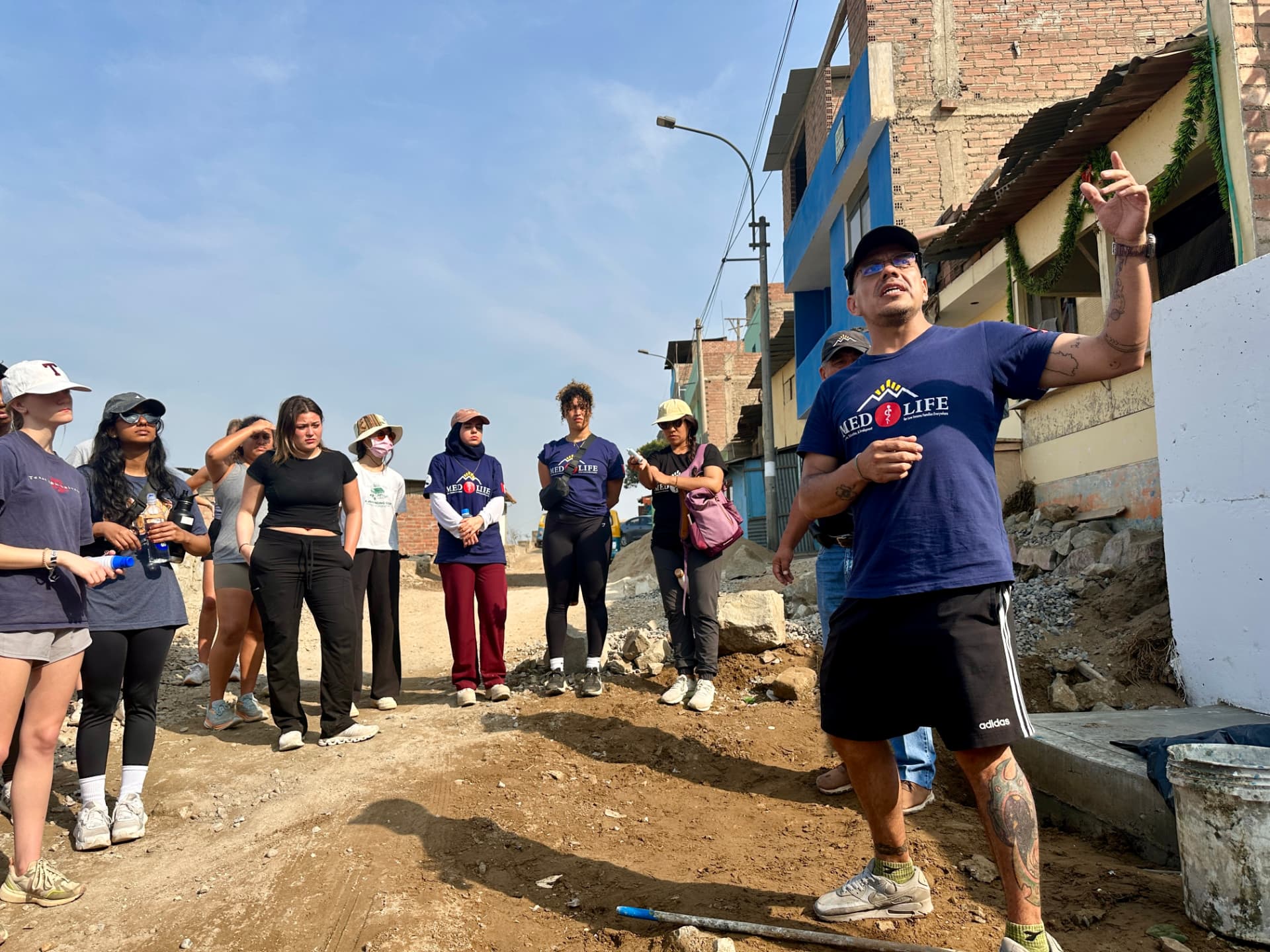
As MEDLIFE developed, pieces of Thom's educational approach kept appearing. Reality Tours asked students to understand a community before serving in it. Community conversations made local people teachers. Visits to health systems, markets, farms, schools, development projects, and local organizations helped students connect individual stories to larger structures. Reflection asked students to question their own assumptions.
Our best trips were never simply about how much work students could complete in a week. They were about what students could understand — and what that understanding might change about the way they serve for the next 40 years.
Full circle
Then I Got to Come Back as a Professor
Years after Panama, McGill invited me into its African field-study program. The course I taught was GEOG 493: Health and Environment in Africa. The syllabus described the course as being based on “lectures, field-trips, interviews, and participatory learning.” That sentence captures field education better than almost anything I could write today.
Students did not study health disparities only from readings. They moved through Kenya. They encountered different communities and systems. They studied colonialism, foreign aid, disease burden, climate change, structural violence, healthcare access, tuberculosis, HIV, infrastructure, sustainability, equity, scalability, and community-led development.
The field was not a break from the course. The field was the course.
The distinction
Experience Alone Is Not Education
Travel can expose you to something new. Field education asks you to make sense of it. In Kenya, students were assessed on both what they read and what they saw. They had to compare evidence, defend interpretations, design interventions, think about sustainability, and confront trade-offs.
That distinction became important to MEDLIFE. A powerful experience is not enough. Students need context before they arrive. They need questions while they are there. They need reflection while their assumptions are being challenged. And they need synthesis afterward. Without those elements, even extraordinary travel can remain superficial.
Two principles
Understanding + Accompaniment
Understand deeply
Thom Meredith helped teach me to understand systems before acting. That is the first principle field education gives a service trip: the discipline of looking before you decide.
Then accompany
Later, my experience with the work of Paul Farmer and Partners In Health reinforced a second principle: do not disappear after the intervention. Those two ideas — field education and long-term local commitment — sit close to the center of MEDLIFE.
Students come and go. Our responsibility to communities does not. That is why MEDLIFE local teams and partners continue working after a visiting group returns home.
The question that stayed
Could a MEDLIFE Trip Become a Real Field Course?
After our experience in Kenya, Thom and MEDLIFE explored a fascinating question. MEDLIFE had already developed Leadership Corps, a roughly two-week experience across Ecuador and Peru with readings, academic discussions, Reality Tours, community visits, patient follow-up, service, development, and reflection. Our own 2020 materials called it a “two-week-long field course.”
Thom reviewed the model and believed it was academically rigorous enough to serve as the basis of a university field course with appropriate evaluation. We explored adding a McGill academic pathway around the existing experience. One concept was especially exciting: a 12-week academic course whose final international field experience would become the practical capstone — the moment students had to apply what they had spent the semester learning.
The 2020 international program was ultimately interrupted before that version could operate. But the idea stayed.
Our philosophy
What MEDLIFE Believes About Learning in the Field
Listen before you act.
MEDLIFE was built around a simple refusal: providing a service we feel is necessary, instead of a service people living in poverty say they need. Listening is the first step of every program.
Never abandon the patient.
The early medical-mission model left no records and no follow-up. MEDLIFE's local teams stay year-round, so care and community work continue long after a group flies home.
Local professionals lead the work.
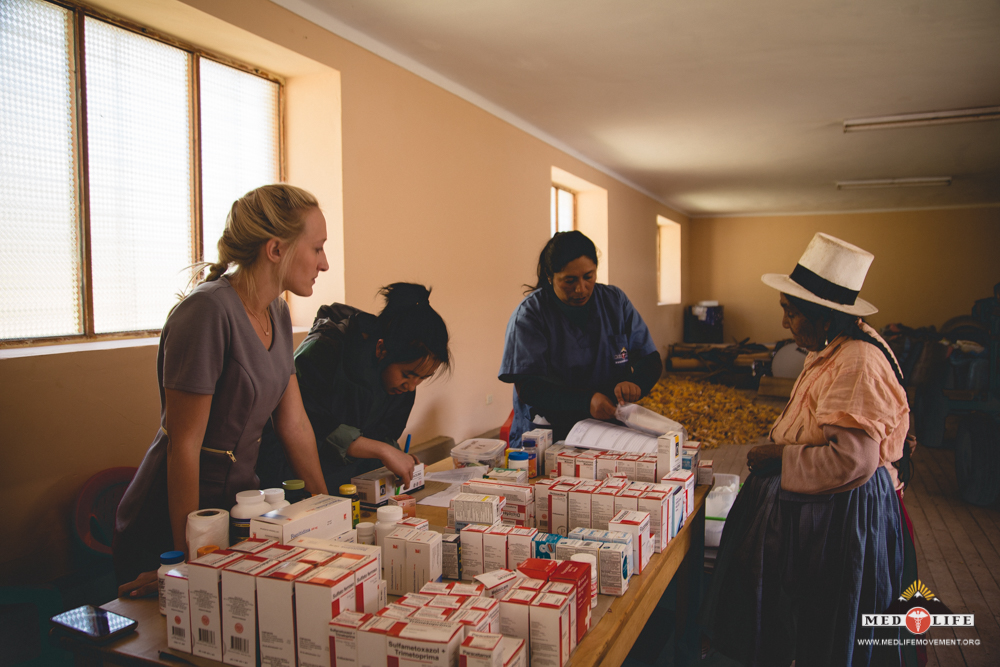
Healthcare is delivered by licensed local doctors who know the language, the culture, and the in-country referral systems. Students learn alongside them — they do not replace them.
Students are learners, not rescuers.
A trip does not transform a community, and MEDLIFE never claims it does. Students enter existing relationships as contributors and observers, then reflect on their own role.
Credibility
Why Schools and Universities Trust the Model
MEDLIFE is not a volunteer placement agency. It is a year-round local operator with the infrastructure to support serious educational programs.
Year-round local teams
Local staff live and work in the communities MEDLIFE serves and remain long after a student group leaves.
Licensed local professionals
Healthcare is led by doctors who know the language, the culture, and the in-country referral systems.
Two continents
Programs across Latin America and Africa, with field infrastructure in every region we operate.
A 501(c)(3) nonprofit
A registered nonprofit accountable to the communities it serves, not to a volunteer experience quota.
Many ways of learning
From One Professor's Influence to Many Ways of Learning
These models are different because the learners are different. The principle underneath them is not. Depth matters.
Berkeley
Semester academic preparation + global health + sustainability + Spanish + cultural humility + field experience.
Drexel
Faculty-led course + pre-departure preparation + intensive field laboratory + community-development partnership + post-return synthesis.
McGill–MEDLIFE Leadership Corps
An existing MEDLIFE two-week field course + proposed university academic wrapper and evaluation.
Delaware
Three- to four-week immersion + service + development + multiple regions/countries + major cultural and destination experiences.
Dana Hills
High-school immersion + parent champion + professional adult mentors + service + culture + adventure + long-term school/family relationship.
Go somewhere. Then learn enough to see it differently.
MEDLIFE's Immersion & Field Education SLTs are built for students and educators who want more than international exposure — context, relationships, responsibility, questions, service, and a deeper understanding of the world they hope to change.
info@medlifemovement.org