Service
Through Mobile Clinics and Development Projects you help bring accessible medical care, health education and safer homes to the communities you visit.
Lima + Quito + Riobamba + Galápagos, Peru & Ecuador · Bundle
A three-week bundle across two countries: a Service Learning Trip week in Lima's hillside settlements, an included full day in Quito at the Middle of the World, a second SLT week in the Ecuadorian Andes around Riobamba, and a week island-hopping through the Galápagos. Tap any section — everything is short, searchable and made for reading on your phone.
For more information email info@medlifemovement.org
Overview
Service Learning Trips are retreats where you disconnect from distraction, reconnect with purpose, and learn the mindset and skills required to serve ethically and sustainably. They are the beginning of a lifelong journey, not the end.
Through Mobile Clinics and Development Projects you help bring accessible medical care, health education and safer homes to the communities you visit.
Trips are designed with sustainability in mind — in Lima you may join an environmentally friendly project such as a public park or an eco-bathroom.
Learn the historical, political and economic factors shaping families' realities, and deepen your global-health knowledge by shadowing professionals.
Eye-opening experiences and human connection renew your passion for a world free from the constraints of poverty.
Flip the switch — same week, two very different mindsets
MEDLIFE Service Learning
Listening to community needs and acting responsibly to support sustainable, culturally sensitive and community-led change.
Voices from students
Hear from students, teacher and parents who have already been in the field with MEDLIFE.
“It's very eye opening to see all these communities and it's something that's going to stick with me my whole life. Given the opportunity, anyone should do the same.”
Sasha
SLT Director, Canada
“Listening is the most important part of healthcare. After the first clinic week that I experienced last year, I decided I wanted to go to med school.”
Sammy
SLT Coordinator, Binghamton University
“As someone living in the United States, water is a resource that we really take for granted and we don't realize it's actually a big blessing.”
Sara
President, MEDLIFE chapter at Penn State Harrisburg
“It's going to be the best experience of your life. You make so many friends, so many connections. Doing these mobile clinics are so eye opening.”
Emily
VP, MEDLIFE chapter at the University of Pittsburgh
Quick check 1 of 3
What are the three pillars of every MEDLIFE Service Learning Trip?
About Lima + Quito + Riobamba + Galápagos
This bundle spans two countries. Week 1 is based in Lima, Peru's coastal capital and MEDLIFE's headquarters, working in the “pueblos jóvenes” (human settlements) on the city's steep, sandy hillsides. You then fly to Quito, Ecuador — a UNESCO-listed capital high in the Andes — for an included full day at the Middle of the World, before travelling by bus to Riobamba for a second week of mobile clinics and a community development project in Indigenous highland communities, where the MEDLIFE Movement began. Week 3 is a Galápagos island-hopping extension.
Central Pacific coast of Peru · roughly sea level · Peru's capital and MEDLIFE's headquarters city.
Population: 9,674,755
Open larger mapLanguage
Spanish
Quechua is also spoken by many families who migrated from the Andes.
Altitude
Sea level · coastal desert
No altitude adjustment needed in Lima.
Climate
Mild, humid · grey “garúa” mist
Bring a light jacket; hillsides are dusty and sunny at midday.
Currency
Sol (S/.) · $1 ≈ S/. 3.49
Carry small bills; cards are rare in the communities.
Time zone
PET (UTC−5)
Same as US Eastern in winter, no daylight saving.
Context
~26% of Lima/Callao in poverty
Many families live in precarious housing without running water or electricity.
Chimborazo Province, central Andes of Ecuador · roughly 2,754 m (9,035 ft) above sea level · about a 4-hour bus ride from Quito, the capital.
Ecuador population: 17.5 million · Riobamba city: ~225,000
Open larger mapCapital
Quito
You fly into Quito (UIO) before travelling to Riobamba.
Language
Spanish & Quechua
Many patients in the surrounding Indigenous villages speak Quechua.
Currency
US Dollar ($)
Ecuador uses the US dollar — carry small bills; cards are rare outside the city.
Altitude
2,754 m / 9,035 ft
Altitude sickness is common the first couple of days — hydrate and rest.
Climate
Cool year round · 55–70ºF (14–22ºC)
Rain falls year round; August is wettest, February driest. Sun is intense at altitude.
Context
One of Ecuador's poorest provinces
Where the MEDLIFE Movement began, in the mountains around Riobamba.
We partner with local leaders in the human settlements on the outskirts of the city, supporting community-led initiatives that strengthen infrastructure, health, education and opportunity.
Quick check 1 of 3
What are the hillside communities on the outskirts of Lima commonly called?
Your week
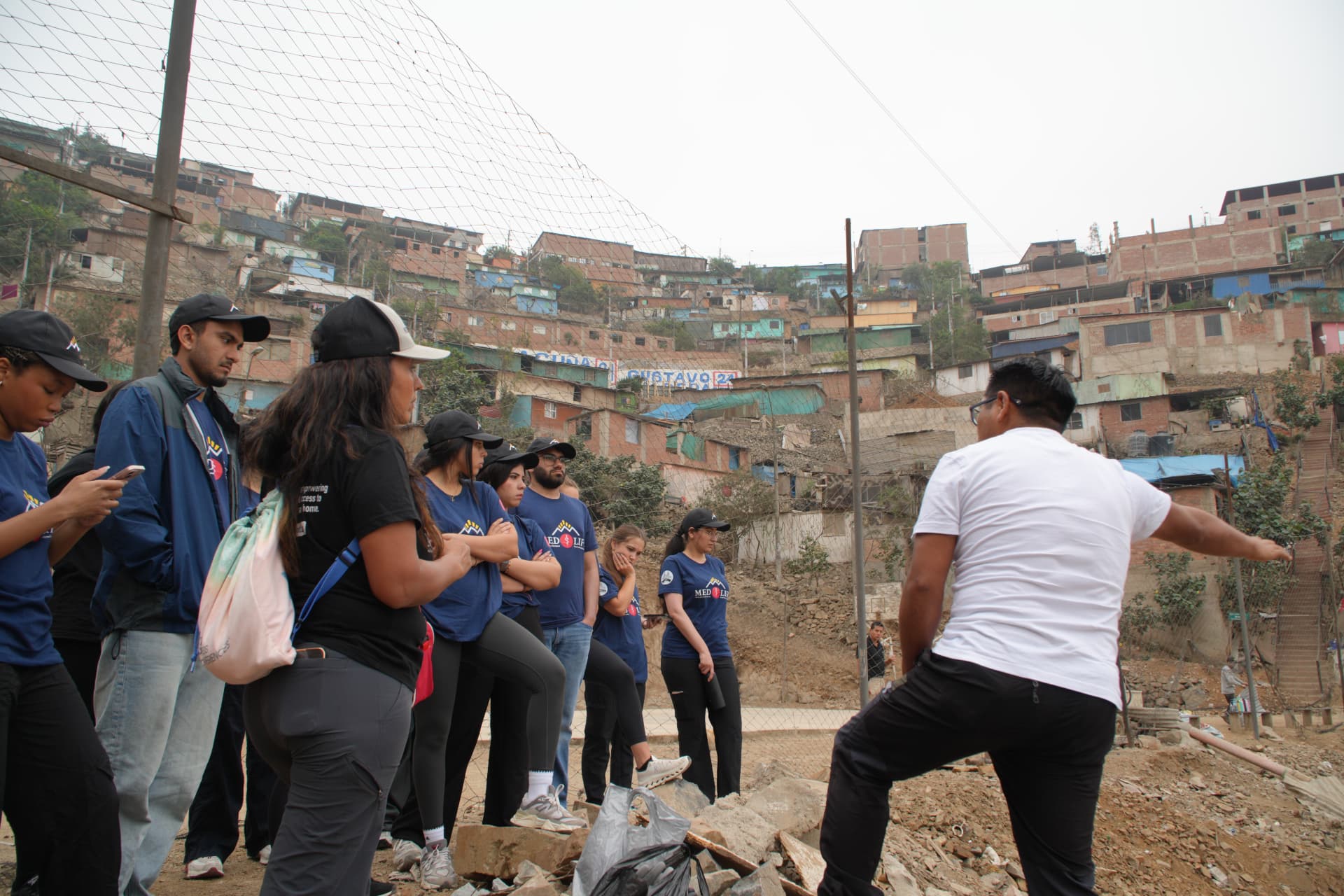
Learn directly from local leaders about the social, cultural and systemic factors shaping their communities.
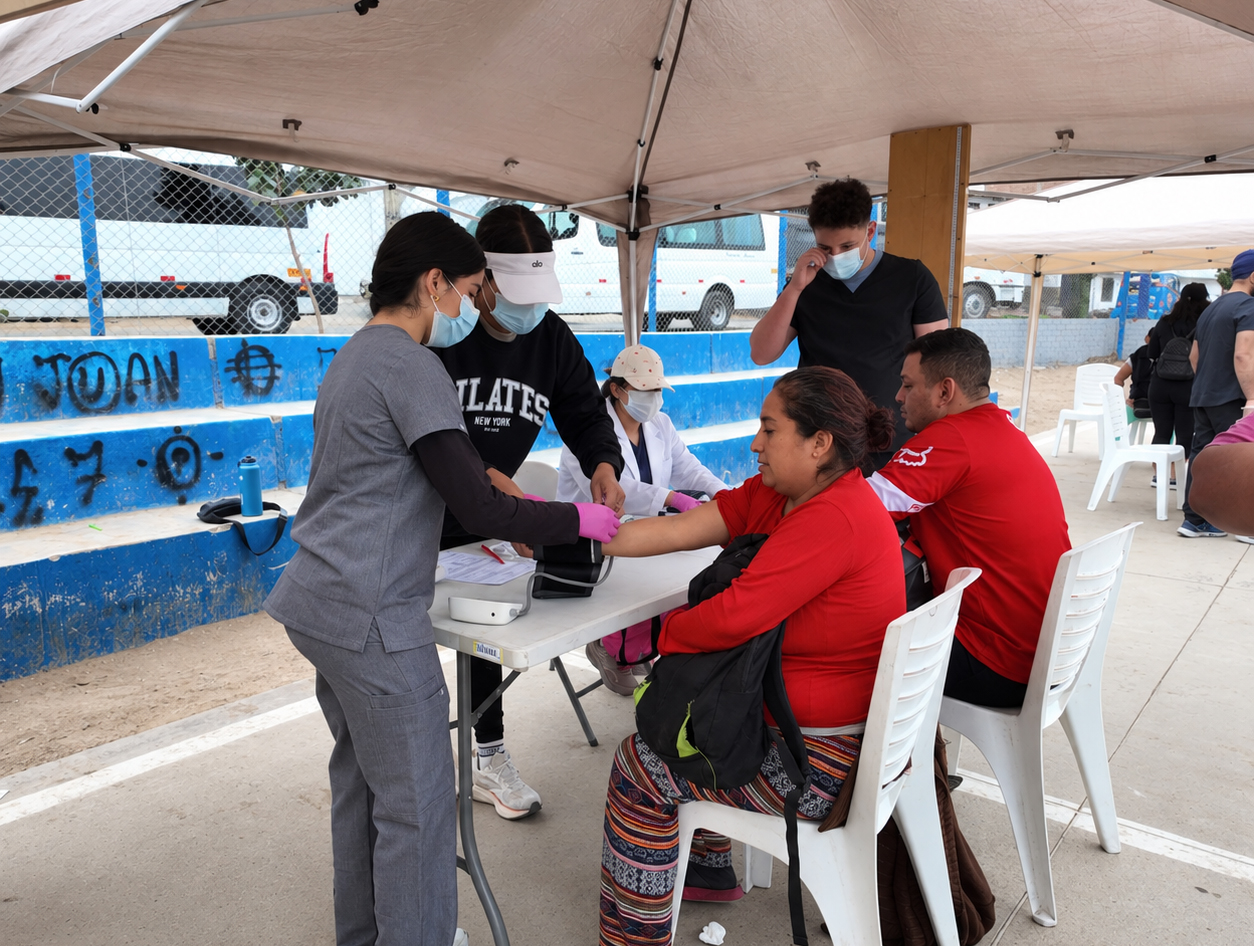
Shadow licensed local professionals and gain real-world insight into community-centered healthcare.
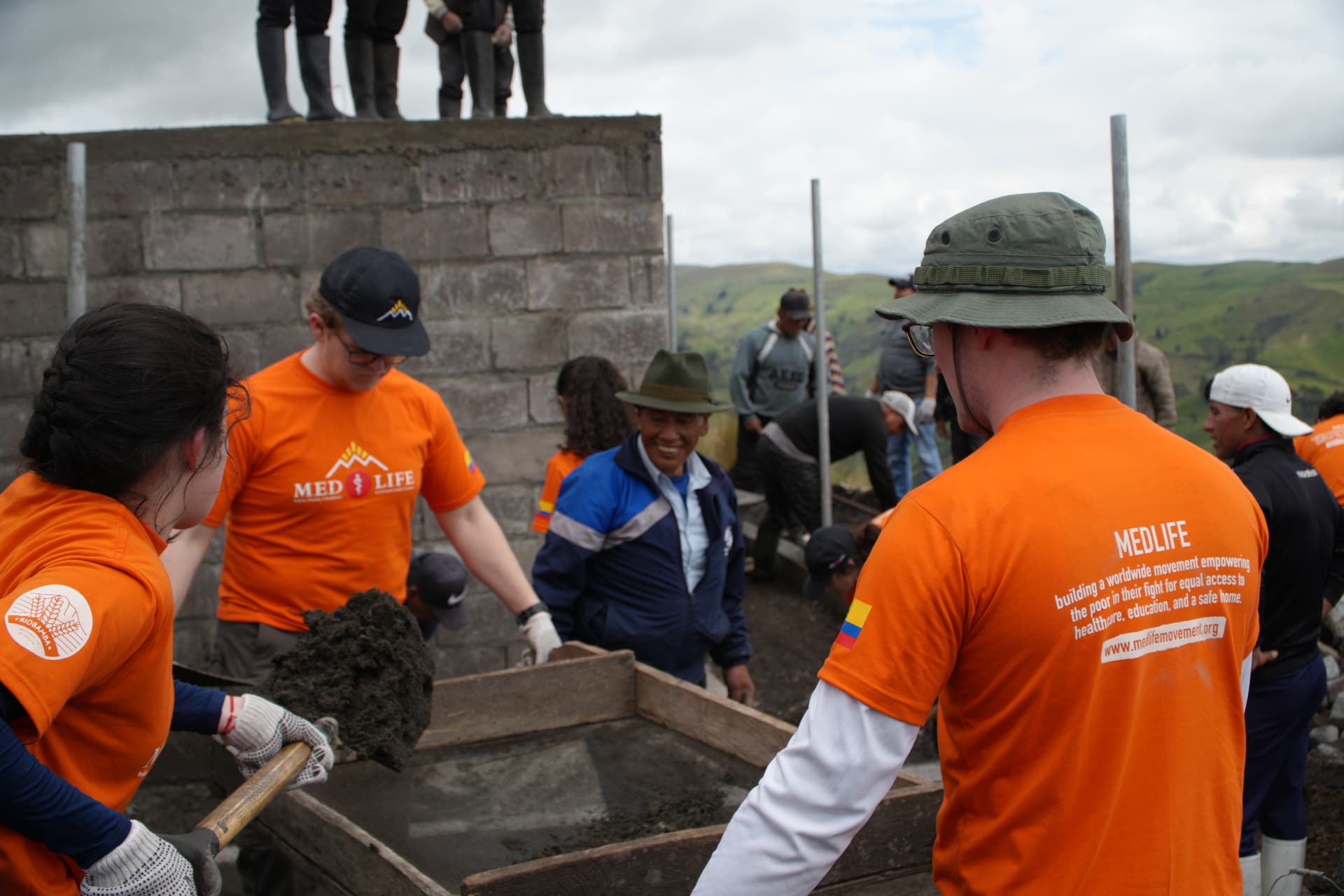
Work alongside locals on a hands-on community project — installing fuel-efficient stoves, building safe homes, or renovations — then celebrate the results at an inauguration with the community.
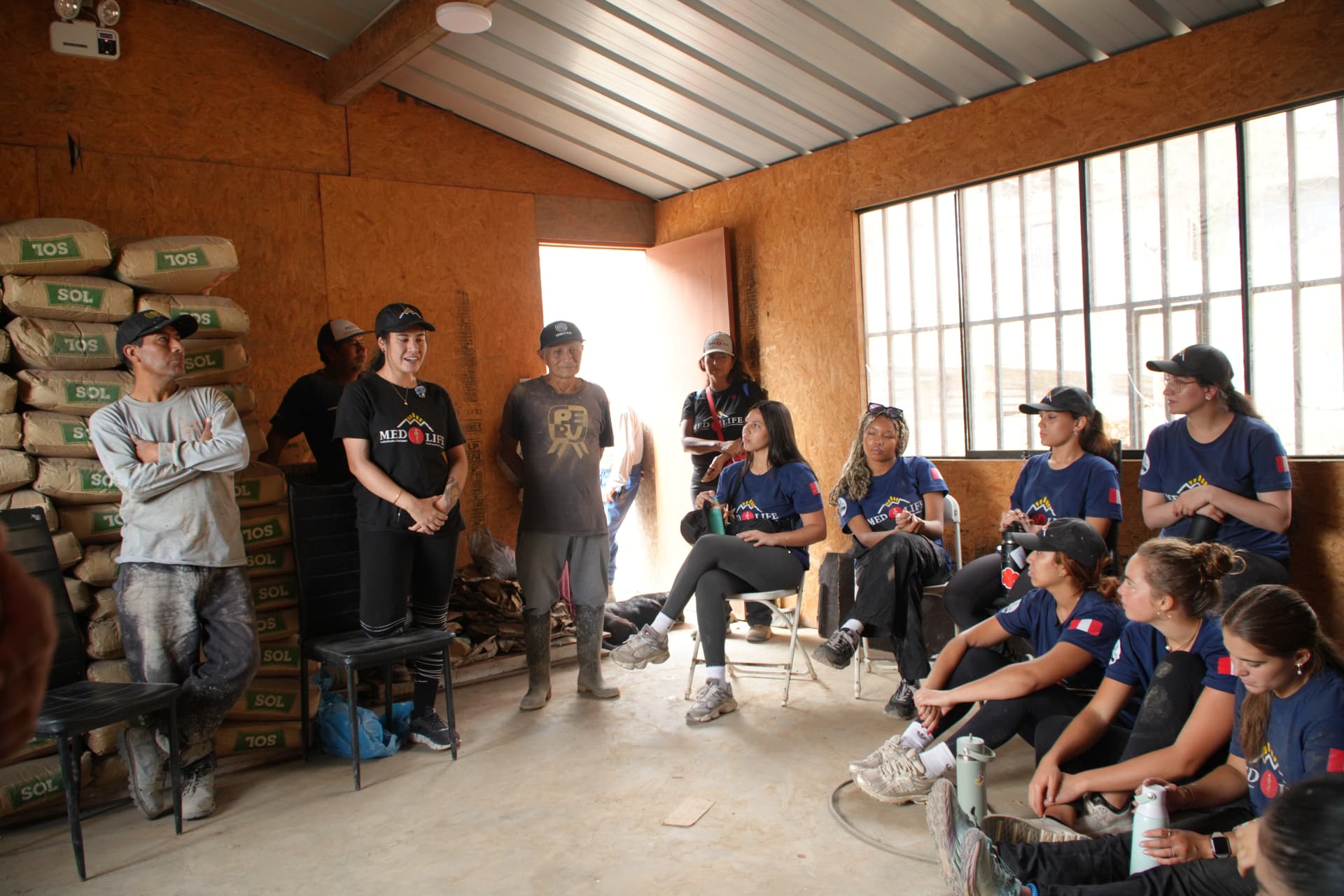
Evening discussions that deepen understanding of global health, equity and ethical service.
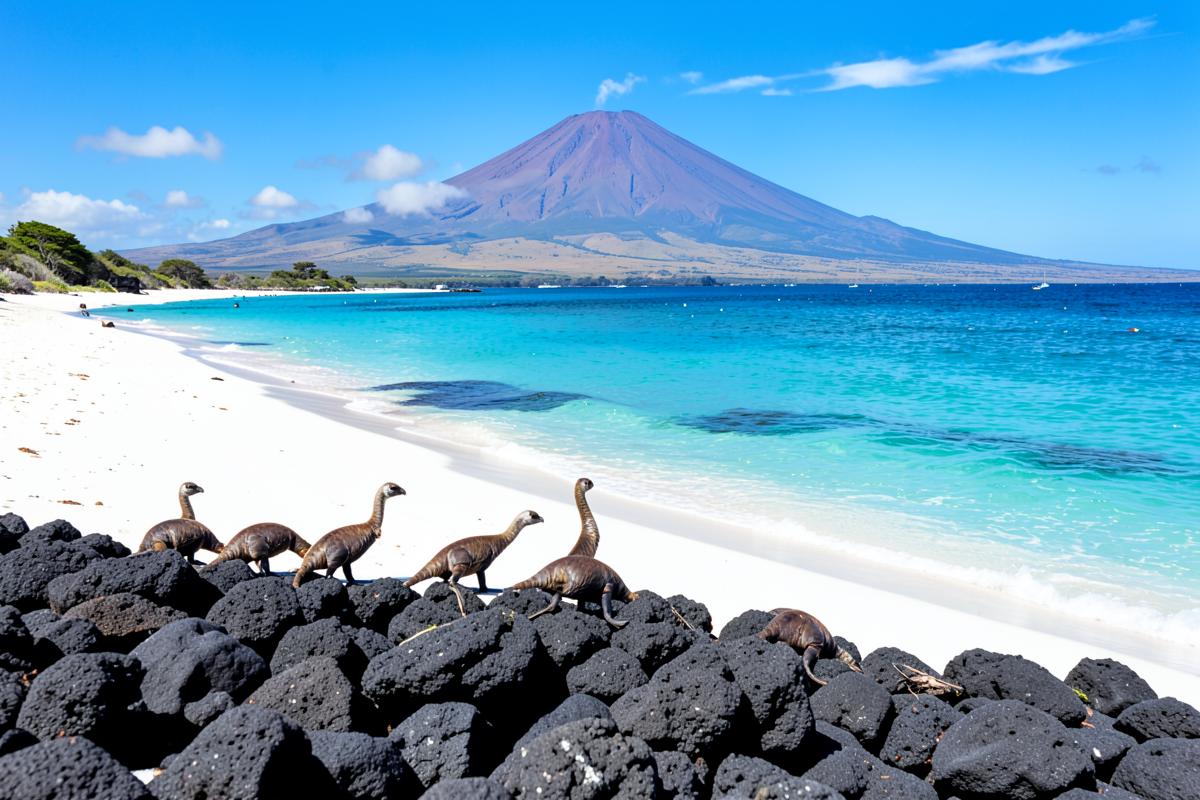
A week-long island-hopping extension through the Galápagos: snorkel with sea lions, hike volcanic trails, spot giant tortoises and marine iguanas, and learn how conservation and community coexist on the islands.
Mobile clinic
Stations may vary with community needs and group size. Patients return to Education between specialists, and Pharmacy is always last.
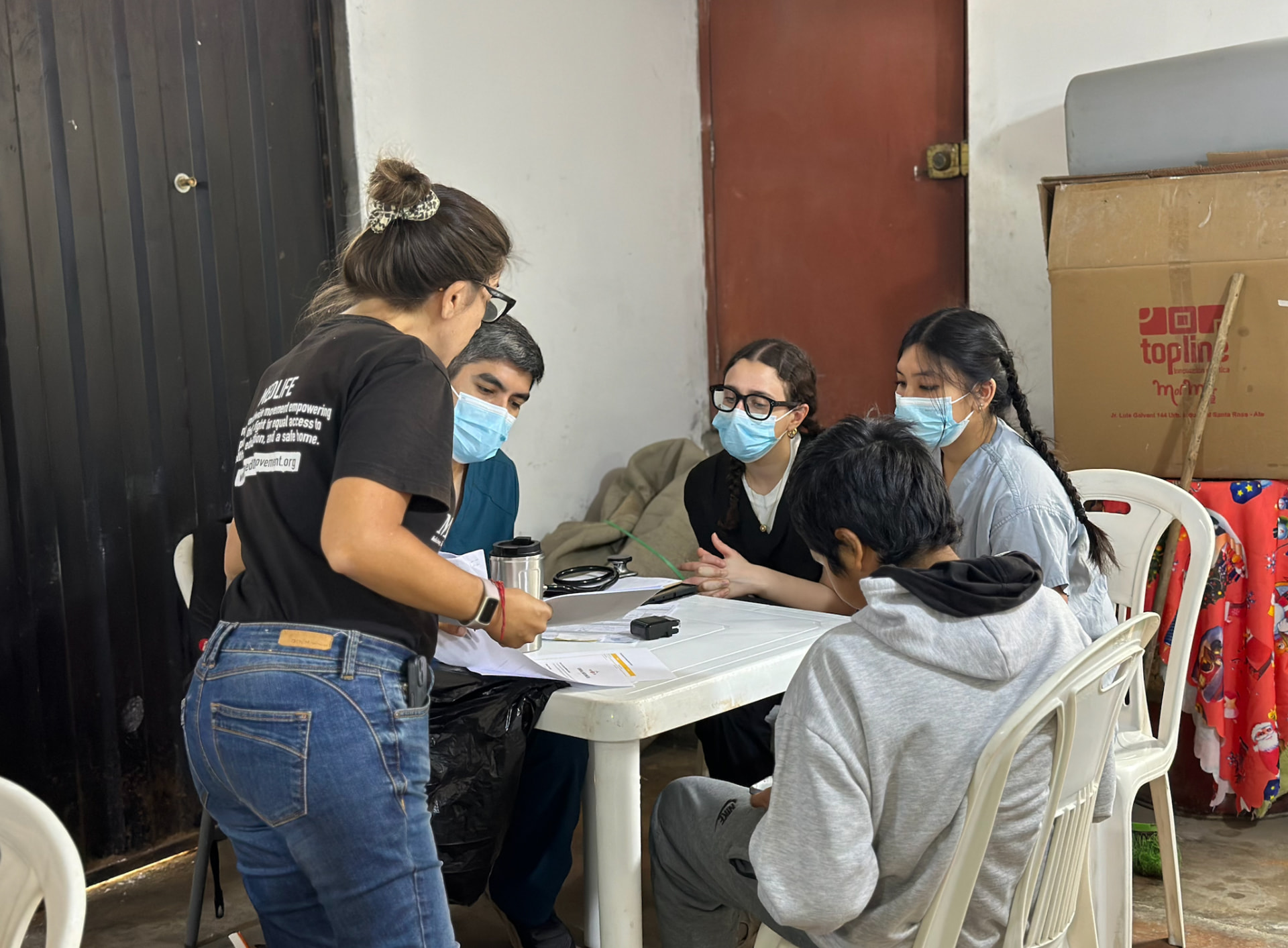
The first station patients visit. Here we collect contact information, basic medical history and vitals for the physicians to use during consultations.
| English | Spanish | Quechua |
|---|---|---|
| Blood pressure | Presión arterial | Presionnekyta |
| Arm | Brazo | Maki |
| Bag | Bolso | — |
| Hat | Sombrero | — |
| Shoes | Zapatos | Sapathuykita |
| Jacket | Chompa | Chompaykita |
| Scale | Balanza | Janp'ar Turajjchana |
| Tape measure | Cinta métrica | Tupu |
| Thermometer | Termómetro | — |
| Alcohol | Alcohol | — |
| Cotton | Algodón | — |
| Medical record (adult / child / dental / OB) | Ficha médica de adulto / niño / dental / OB | — |
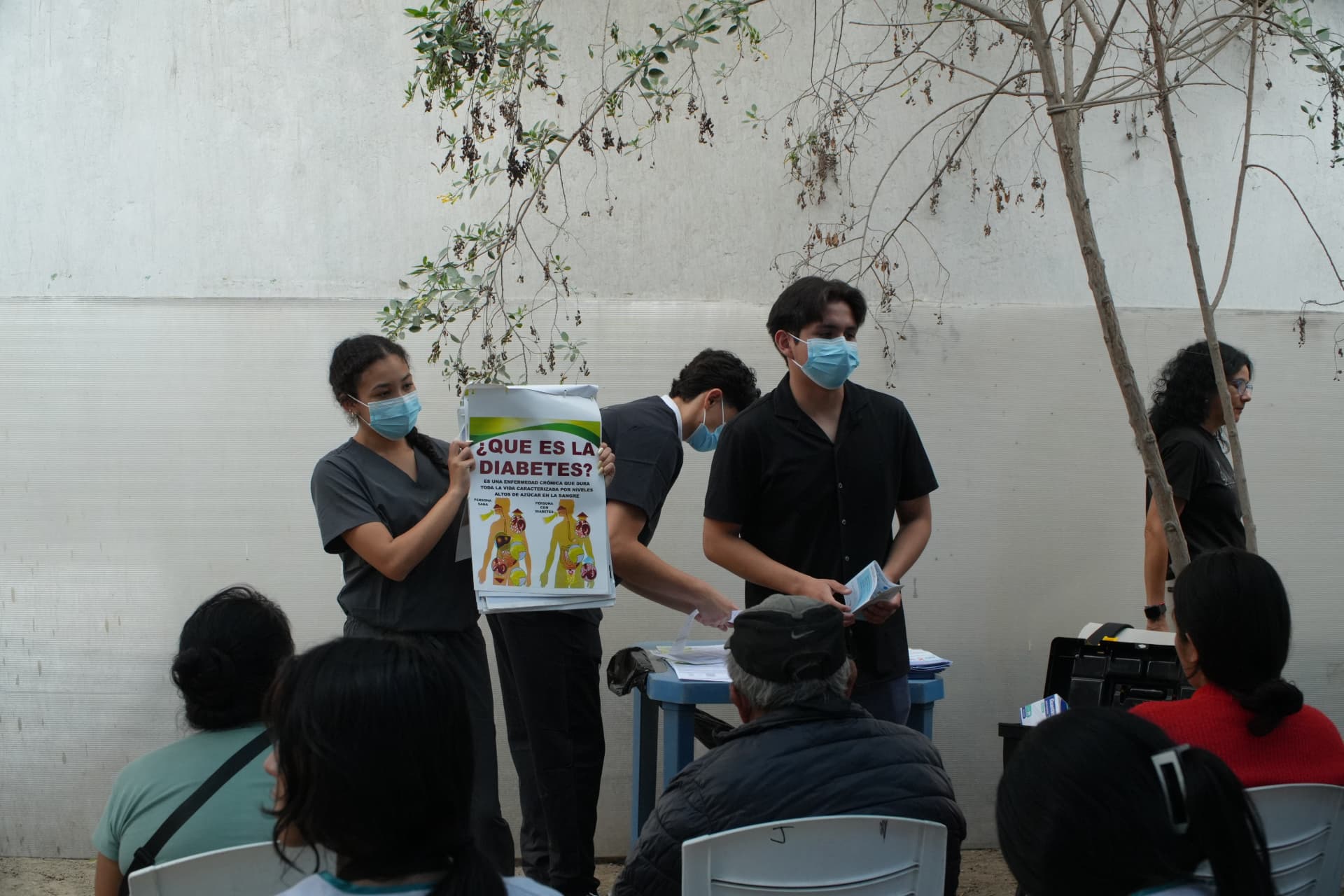
A space for health education on oral health, and more. It also serves as the waiting room between stations.
| English | Spanish | Quechua |
|---|---|---|
| Educational brochures | Trípticos | — |
| Stamp | Sello | Suñari |
| Urine test | Examen de orina | Hispay Qawanapaq |
| Blood test | Examen de sangre | Yawar Qawanapaq |
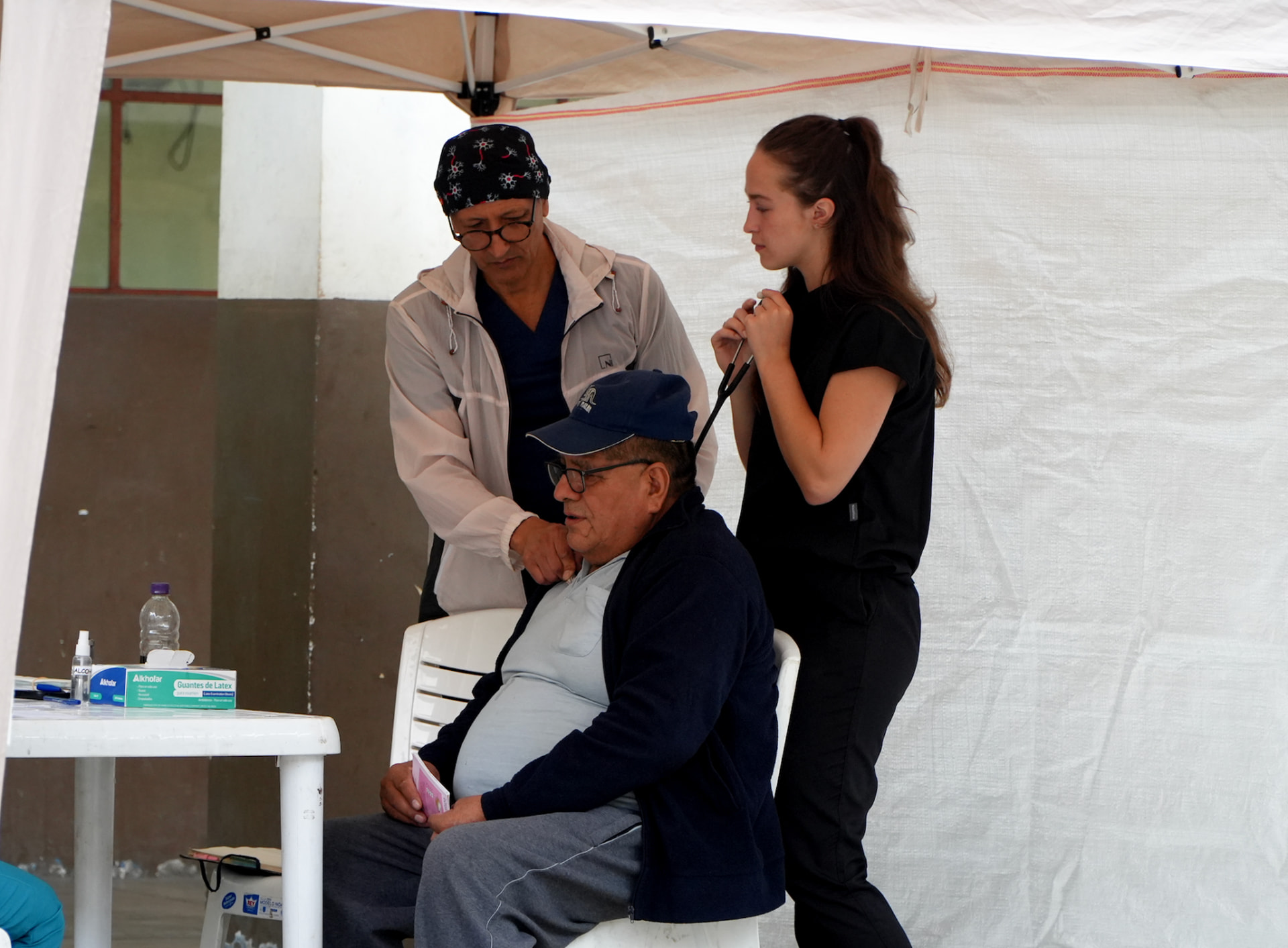
The major station where doctors address individual medical issues and identify patients who need follow-up care.
| English | Spanish | Quechua |
|---|---|---|
| Tongue depressor | Bajalengua | — |
| Flashlight | Linterna | K'anchay |
| Stethoscope | Estetoscopio | — |
| Pharmacy receipt | Recetario | — |
| Medicines | Medicinas | Hampi |
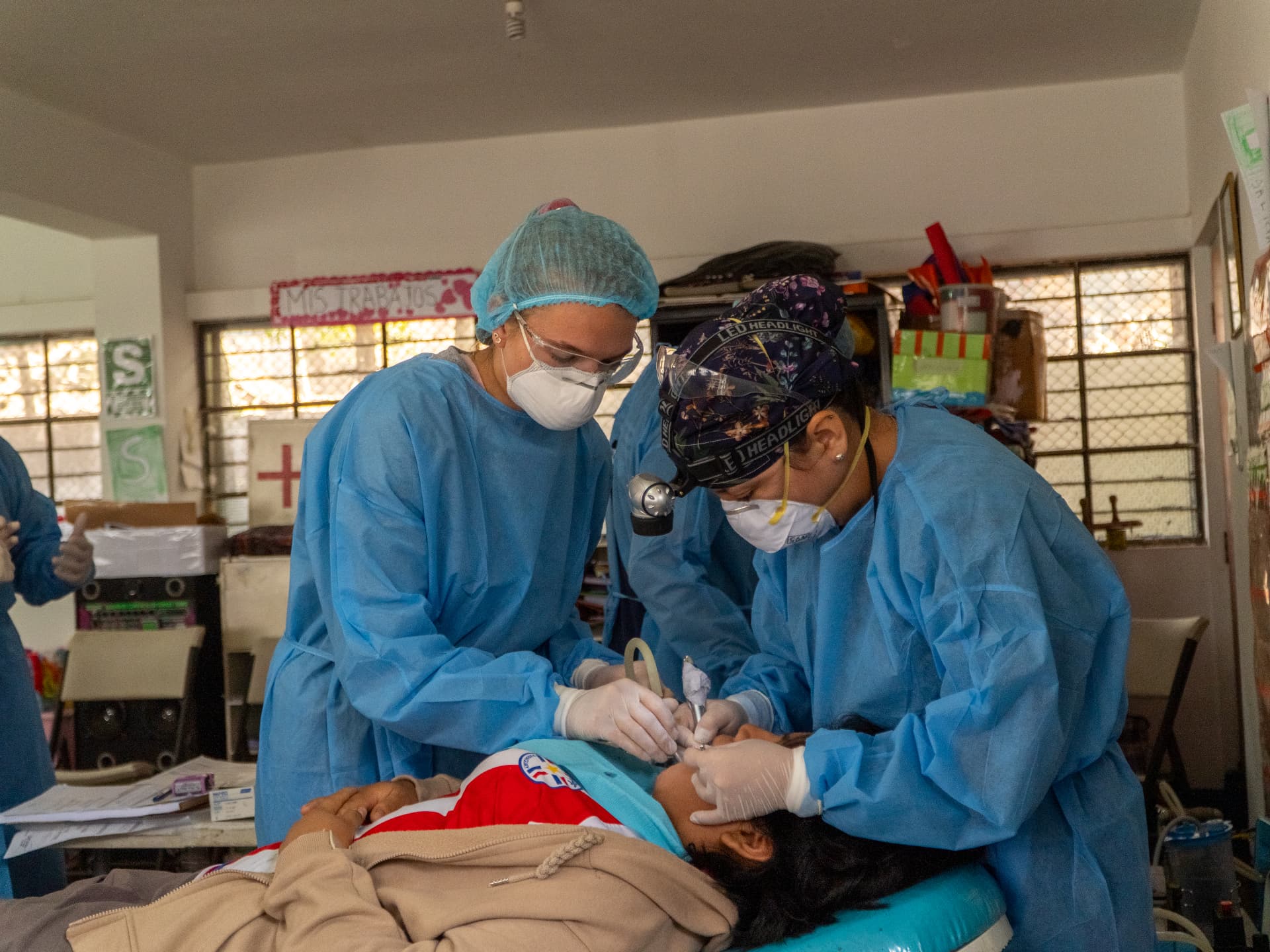
Offers fillings and extractions. Dental professionals will ask you to assist with a range of hands-on duties.
| English | Spanish | Quechua |
|---|---|---|
| Tooth / teeth | El diente / los dientes | — |
| Dentist | Dentista | — |
| To the left | A la izquierda | — |
| To the right | A la derecha | — |
| Flashlight | La linterna | — |
| To clean | Limpiar | — |
| Dental chair | Silla dental | — |
| Cavities | Caries | — |
| Fillings | Curaciones | — |
| Extraction | Extracción | — |
Addresses gynecological issues including breast exams and cervical cancer screenings. Only female students over the age of 18 attending a Classic SLT may shadow this station. This is a service offered (but not shadowed) during High School SLTs.
| English | Spanish | Quechua |
|---|---|---|
| Pap smear | Papanicolaou | — |
| Breast exam | Examen de mamas | Qawasunki / Ñuñukita |
| Speculum | Espéculo | — |
| Spatula | Espátula | — |
| Specimen / sample | Muestra | Qawana |
| Fungus | Hongos | — |
| Swab | Isopo | — |
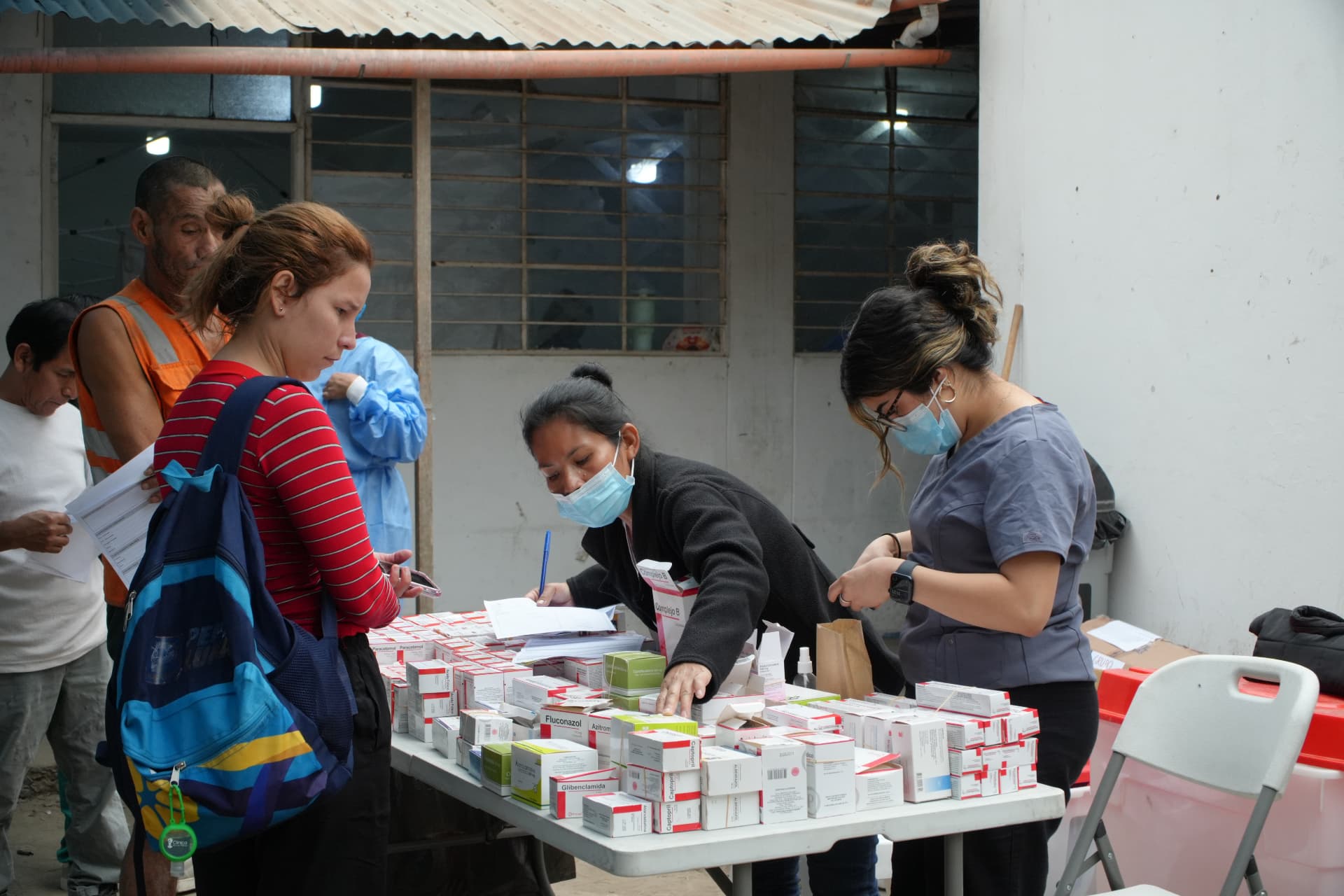
The final station, where prescriptions are filled. Data collected here helps MEDLIFE track medication and enroll patients in the Patient Follow-Up Program.
| English | Spanish | Quechua |
|---|---|---|
| One patient at a time | Un paciente a la vez | Ch'ullach'ullamanta |
| Please give me your prescription and registration form | Por favor, deme su receta médica y su ficha de registro | Maymy Recetaiky |
| These are your medicines | Estas son tus medicinas | Keymi Hampiquna |
| Thank you for coming! | ¡Gracias por venir! | Allinmy Jamuranky |
| Vitamins | Vitaminas | — |
| Prescription | Receta médica | Hanpi Papil |
| Syrup | Jarabe | — |
| Pill | Pastilla | — |
| Paste / creme | Pasta / crema | — |
| Bottle | Botella | Porongo |
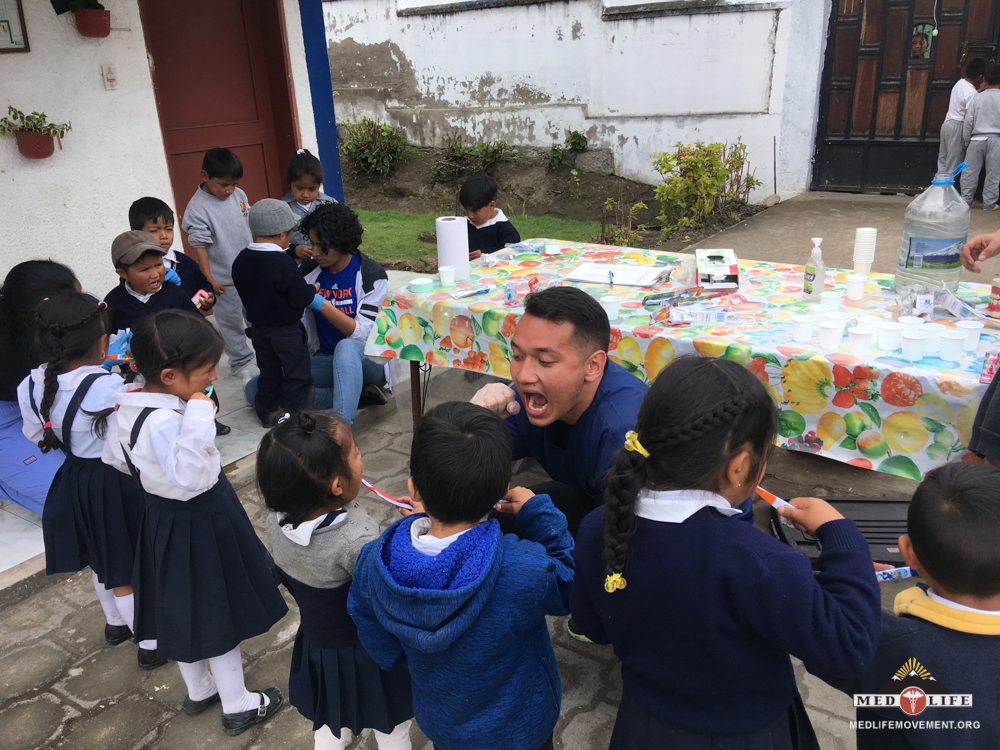
Teaches children aged 3 and up about dental hygiene. Children need no history form, and this is the only station without a medical professional — be proactive.
| English | Spanish | Quechua |
|---|---|---|
| Toothbrush | Cepillo de dientes | Maqchey Kiruta |
| Toothpaste | Pasta dental | — |
| Cup | Vaso | Ukyana |
| Water | Agua | Yaku |
| Fluoride | Flúor | — |
| What is your name? | ¿Cómo te llamas? | Iman Sutiqy |
| How old are you? | ¿Cuántos años tienes? | Jahik'a Huataiky |
| Take a toothbrush and a cup | Toma un cepillo y un vaso | Japy'hi Cepilluta / Kerutayan |
| Brush your teeth in a circular form | Cepíllate los dientes en forma circular | Kiruta Maylliy |
| Rinse your mouth | Enjuágate la boca | Muqch'iy Simikita |
| Don't drink the water | No tomes el agua | Ama Ñilpuyunquichu Unuta |
| Spit out here / there | Escupe aquí / ahí | Keypy Ttokaykuy |
| Wash your toothbrush | Lava tu cepillo | Maqchey Cepilluikyta |
| Now we will place fluoride on your teeth | Ahora pondremos flúor en tus dientes | Hampita Churasaiky |
| Open your mouth wide | Abre la boca bien grande | Kychay Simikyta H'atunta |
| Don't eat or drink anything for an hour | No comas ni tomes nada por una hora | Ama Mijunkychu |
| Don't drink milk for a day | No tomar leche por un día | Ama Hujankychu Lechita |
Quick check 1 of 3
Where does a patient go first when they arrive at the mobile clinic?
Conduct & health
Beyond local laws and regulations, masks must be worn during Mobile Clinics.
Upon arrival, all students attend an extensive safety briefing.
If you feel unwell or show symptoms of any illness, advise your Trip Leader immediately so you can get medical care.
Hand-washing stations and hand sanitizer are available at every Mobile Clinic.
Quick check 1 of 3
Before taking a photo of a patient or community member, you should:
Preparing
A short checklist so you arrive confident, covered and connected before the clinic doors open.
Be sure to confirm any required visas or fees involved in your flight layover based on airport as well.
The attendees of the SLT are responsible for buying their own airfare. However, our team can help you in this process by providing a flight quote for your group. You can request a flight quote by emailing info@medlifemovement.org. Once your flight is booked, please make sure to add your arrival and departure information to your booking.
Airport: Jorge Chávez International Airport (LIM)
Peru & Ecuador — recommended timeframes
Arrival in Lima (LIM): Saturday of week 1.
Internal flights: Lima → Quito and Quito → Galápagos (both booked by MEDLIFE).
Departure from Quito (UIO): after the Galápagos week — one-way ticket home.
If attendees arrive outside of the set time frames, they will be responsible for covering the cost of transportation to their site. If your flight arrives outside the timeframes listed please email info@medlifemovement.org. Remember that any additional nights and transfers that are added before/after your trip because of early or late arrival are not included in the Service Learning Trip donation goal, and will be at the cost of the student.
We highly recommend purchasing trip cancellation insurance, which will allow you to cancel for any reason. You can contact info@medlifemovement.org for more information about our insurance options.
Note that this type of insurance must be purchased within a short number of days of your initial registration, and cannot be added in the days leading up to your departure — reach out as soon as possible to access this opportunity.
MEDLIFE books your stay in Lima for week 1 and in Quito and Riobamba for week 2. Galápagos accommodation is arranged by the partner operator. Save the addresses and phone numbers in case you need to reach reception.
You'll pack for three climates: Lima is mild, humid and at sea level; Quito and Riobamba are cool, sunny by day and cold at night at 2,750–2,850 m; the Galápagos are hot, sunny and humid, so bring swimwear, reef-safe sunscreen and a hat. Pack layers, and remember only carry-on luggage is included on the internal flights.
Many families travel hours to reach our clinics. Donations are handed directly to community members and stations — bring what you can, packed in your checked luggage.
About 3–4 weeks before your trip, MEDLIFE adds you to a WhatsApp group with your Trip Leader and fellow students. It's where we share daily logistics, meeting points, weather notes, and reminders.
If you have not received a WhatsApp invitation at least 2 weeks before your departure, email info@medlifemovement.org with your name and trip dates so we can add you right away.
info@medlifemovement.orgQuick check 1 of 3
You haven't received your trip WhatsApp group invite two weeks before departure. What do you do?
OUR PROTOCOLS
Save these numbers before you fly. If MEDLIFE staff aren't nearby, call or WhatsApp the Peru & Ecuador emergency line.
In destination or in transit
Peru Emergency Phone · WhatsApp, call or SMS
Calling from North America
MEDLIFE HQ Phone
Police
105Tourist Police (WhatsApp)
+51 980 122 335Fire brigade
116Medical emergency
106Civil Defense (earthquakes, disasters)
119Peruvian Red Cross
01-266-0481Clínica Anglo Americana (Lima)
C. Alfredo Salazar 350, San Isidro 15073
+51 1 6168900Tourism Police Peru (Lima)
Jr. María José de Arce 268, Magdalena del Mar 15076
+51 1 4601060Clínica Moderna (Riobamba)
Juan Lavalle, Riobamba
+593 98 747 9097Police Station UPC Condamine (Riobamba)
Juan Lavalle, Riobamba
911Hospital Metropolitano (Quito)
Av. Mariana de Jesús s/n, Quito 170521
+593 2 399 8000Tourist Police — La Mariscal District (Quito)
Roca y Reina Victoria, Edif. Relaciones Exteriores
+593 2 2543 983Trawick International (insurance)
Inside USA: 833-425-5101 · MEDLIFE staff can assist with claims in-destination
+1 603 952 2686Embassy of the United States (Quito)
Av. Avigiras, Av. Eloy Alfaro E12-170, Quito 170124
+593 2 398 5000Canadian Embassy (Quito)
Av. Río Amazonas, Quito 170135
+593 2 245 5499British Embassy (Quito)
Av. de las Naciones Unidas, 14th Floor, Quito 17-17 830
+593 2 397 2200Emergency medical and evacuation insurance up to $250,000 USD with a $250 USD deductible once on a trip.
A doctor's visit to your hotel can be arranged if you feel unwell — typically $50–$100 USD, usually less than the $250 deductible. Staff or hotel reception can coordinate.
Bring $250 USD in cash beyond your spending money to cover the deductible, plus a credit card for emergencies if you have one.
Trawick International · 833-425-5101 (inside USA) · 603-952-2686 (outside USA)
Quick check 1 of 3
In an emergency during the trip, who do you contact first?
After your trip
Take your experiences from the field and put them into action at home through MEDLIFE activities all year round.
Our fundraising campaign supporting day-to-day work in medicine, education and development. MEDLIFErs run Power Hours inviting contacts to donate — often with wild fundraising challenges.
Refer friends at other schools to start a MEDLIFE Chapter, encourage others to travel on a Service Learning Trip, and recruit new members for your Chapter.
Volunteer locally with your Chapter, run for an E-Board position, or become a MEDLIFE Ambassador or Active Member to unlock discounts on your next trip.
Follow us on social media and the blog, send photos and stories to media@medlifemovement.org, and tag us when you share what you saw.
Discover more of MEDLIFE