Service
Through Mobile Clinics and Development Projects you help bring accessible medical care, health education and safer homes to the communities you visit.
Kilimanjaro, Tanzania · High School SLT
A high school week of field education, mobile clinics and a community development project at the foot of Mount Kilimanjaro — with a full day in Arusha, the Chagga caves, Materuni Waterfalls, a traditional painting night and an included full-day safari in Tarangire National Park. Tap any section — everything is short, searchable and made for reading on your phone.
For more information email info@medlifemovement.org
Overview
Service Learning Trips are retreats where you disconnect from distraction, reconnect with purpose, and learn the mindset and skills required to serve ethically and sustainably. They are the beginning of a lifelong journey, not the end.
Through Mobile Clinics and Development Projects you help bring accessible medical care, health education and safer homes to the communities you visit.
Service Learning Trips are created with sustainability in mind — in Tanzania you may take part in an environmentally friendly project such as an eco-bathroom.
Learn the historical, political and economic factors shaping families' realities, and deepen your global-health knowledge by shadowing professionals.
Eye-opening experiences and human connection renew your passion for a world free from the constraints of poverty.
Flip the switch — same week, two very different mindsets
MEDLIFE Service Learning
Listening to community needs and acting responsibly to support sustainable, culturally sensitive and community-led change.
Voices from students
Hear from students, teacher and parents who have already been in the field with MEDLIFE.
“Before coming on the educational trip with MEDLIFE I was excited but still scared — I had only ever experienced America, so coming to a new area I was skeptical, but it was a new experience. The highlight was visiting the Chagga tribe and learning how they make coffee; seeing a community come together with so much joy and pride in their tradition was very wholesome. I learned that I need to explore more — coming here I was exposed to different perspectives, cultures, traditions and value systems, and it made me open-minded and eager to travel. Just do it — there's a lot of hesitation, but once you get in you'll love it and you'll take away something.”
Ahad
Student, Drexel University
Quick check 1 of 3
What are the three pillars of every MEDLIFE Service Learning Trip?
About Kilimanjaro
Over one-third of all households in Tanzania live in poverty, on $1.00 a day or less, with children and rural populations disproportionately affected. Because the economy relies primarily on agriculture, about 75% of the population lives in rural areas, often without access to basic infrastructure or clean water. According to UNICEF, malnutrition is the single biggest contributor to child mortality in Tanzania, with malaria, anemia, pneumonia, diarrhea, HIV and AIDS also key causes. Access to education remains limited: the abolition of primary school fees increased attendance, but with no corresponding increase in teachers, infrastructure or resources.
Moshi, in the Kilimanjaro region of northern Tanzania · near the Kenyan border, at the foot of Mount Kilimanjaro · about a 40-minute drive from Kilimanjaro International Airport (JRO).
Tanzania population: 57.31 million
Open larger mapCapital
Dodoma
Groups fly into Kilimanjaro International Airport (JRO), near Moshi.
Language
Swahili & English
Swahili phrases for every clinic station are included below.
Currency
Tanzanian Shilling (TZS)
Approximate exchange rate: $1 = 2,460 TZS. Bring new USD bills (2013 or newer).
Visa
$100 US / $50 others
Payable on arrival in cash USD (exact change, bills from 2013+), or apply online in advance — recommended.
Climate
Hot & sunny ~84ºF (29ºC)
Rainy season March–June is ~60ºF (15ºC) — bring a raincoat and waterproof shoes. Strong UV: sun protection is a must.
Context
1 in 3 households in poverty
About 75% of Tanzanians live in rural areas, often without basic infrastructure or clean water.
We partner with rural communities around Moshi and the Kilimanjaro region, bringing Mobile Clinics and Development Projects — school constructions, library renovations and hygienic toilets — designed and led by local partners.
Quick check 1 of 3
Where do groups stay during a Kilimanjaro SLT?
Your week
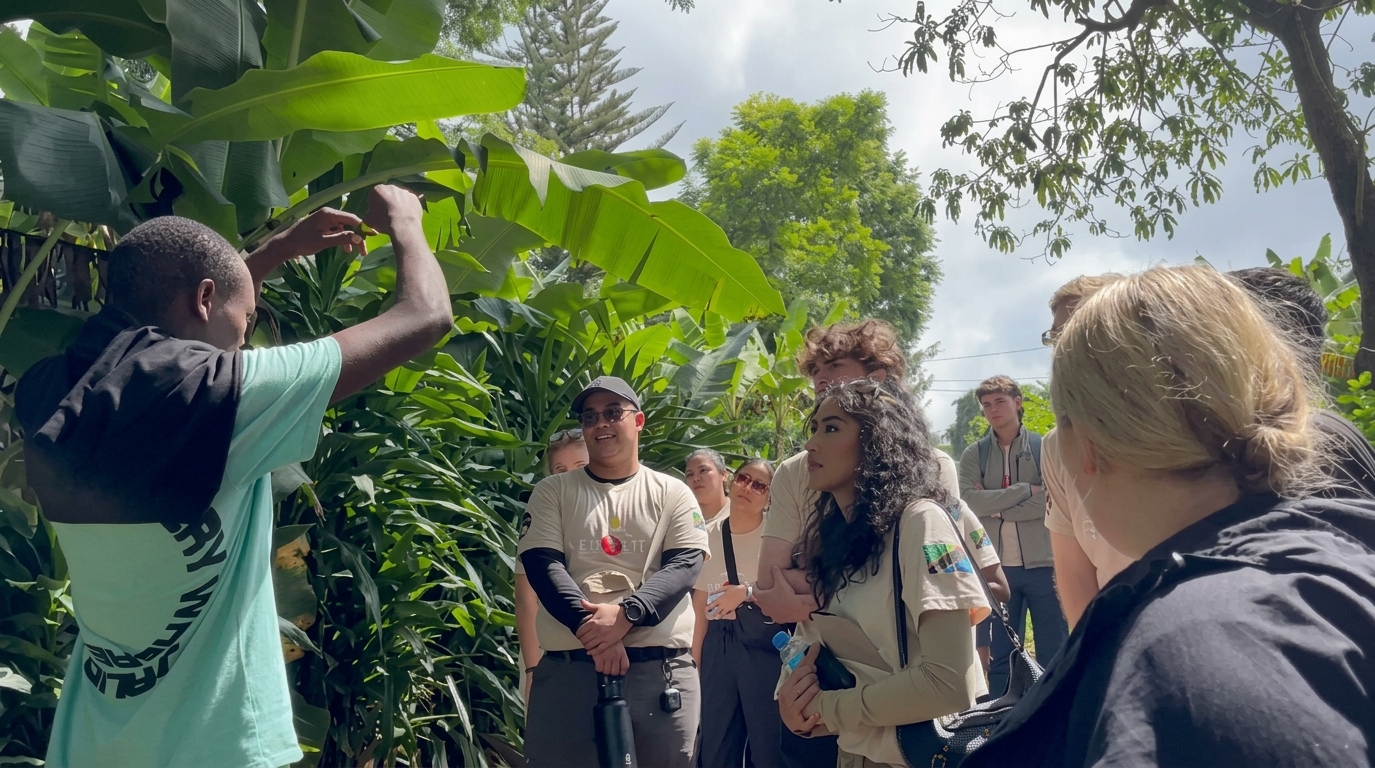
Learn directly from local leaders about the social, cultural and systemic factors shaping their communities.
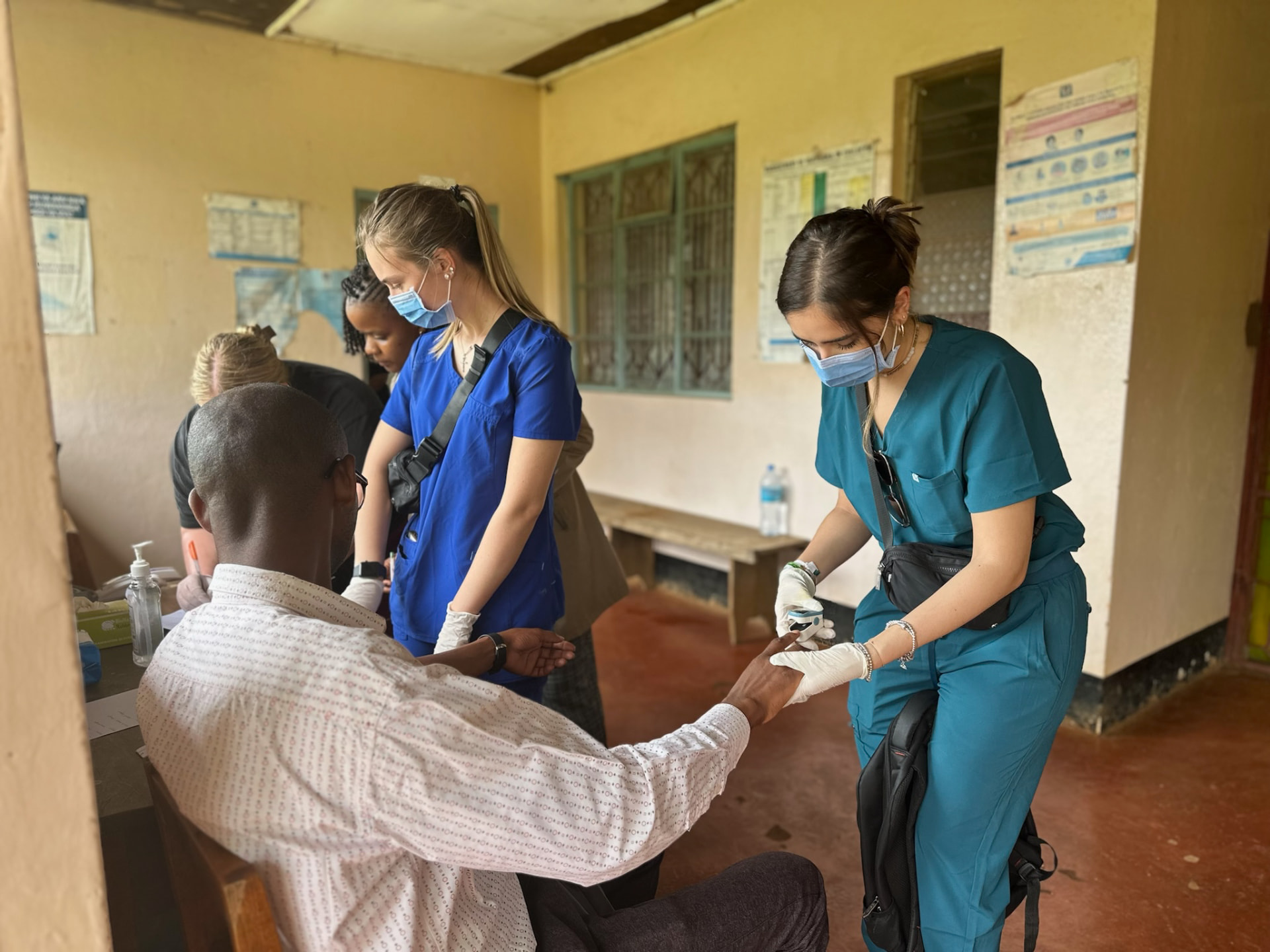
Shadow licensed local professionals and gain real-world insight into community-centered healthcare.
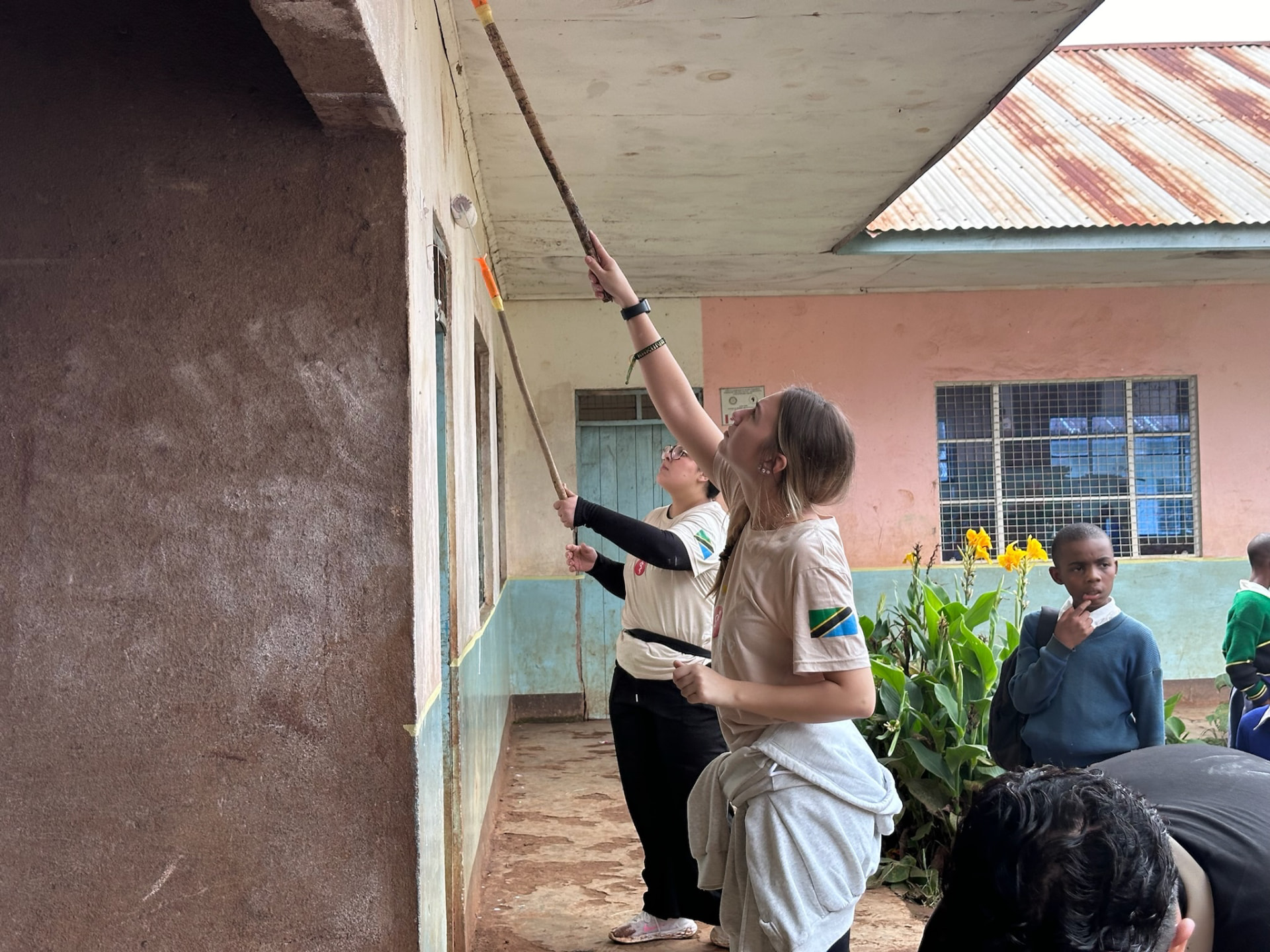
Work alongside locals on a hands-on community project — installing fuel-efficient stoves, building safe homes, or renovations — then celebrate the results at an inauguration with the community.
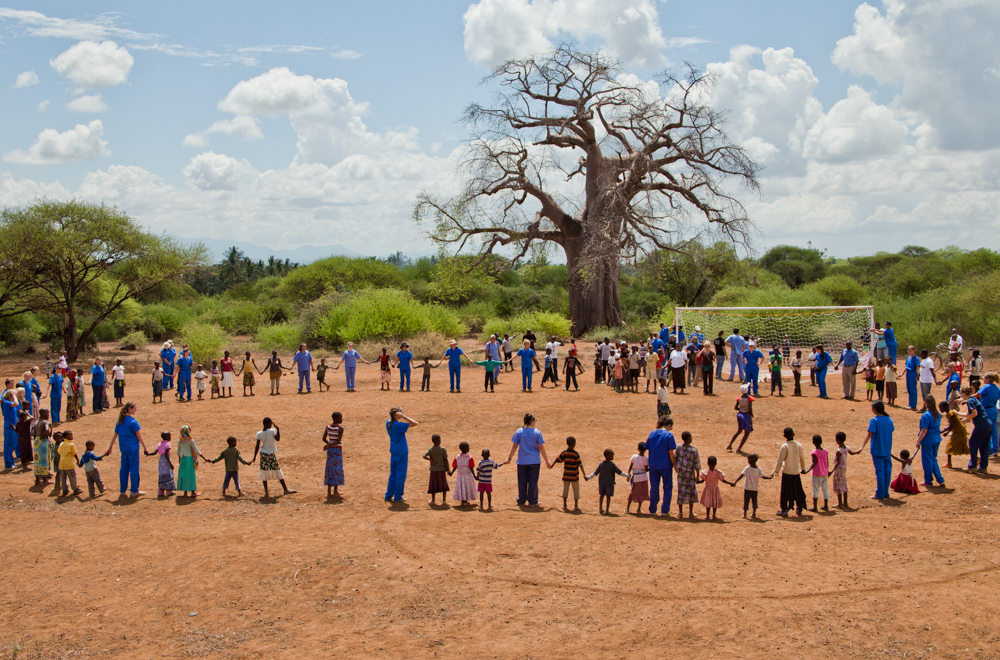
Spend a day immersed in the local culture — share a meal, learn traditional customs, practice the local language, and build genuine connections with the community members you serve alongside.
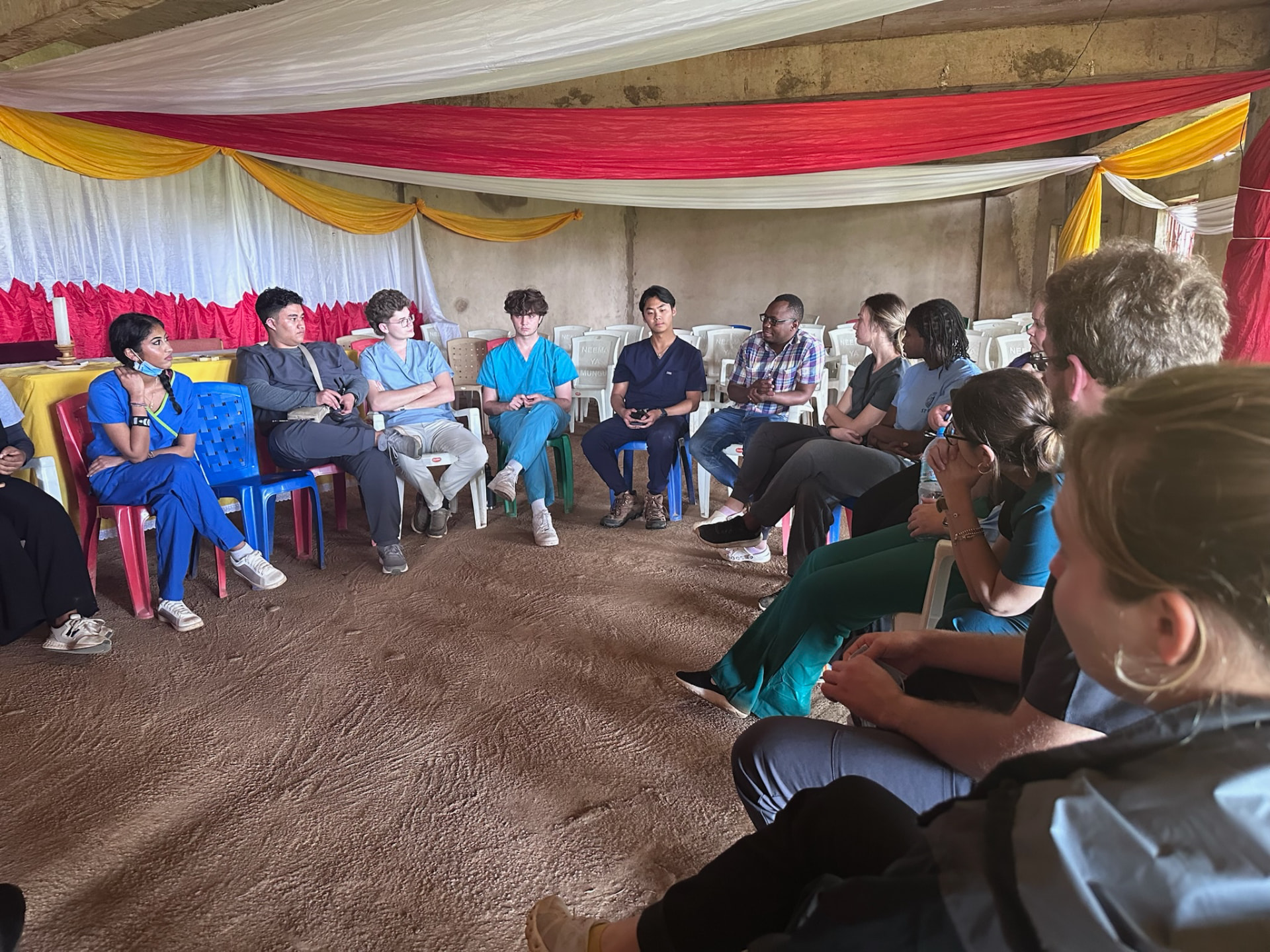
Evening discussions that deepen understanding of global health, equity and ethical service.
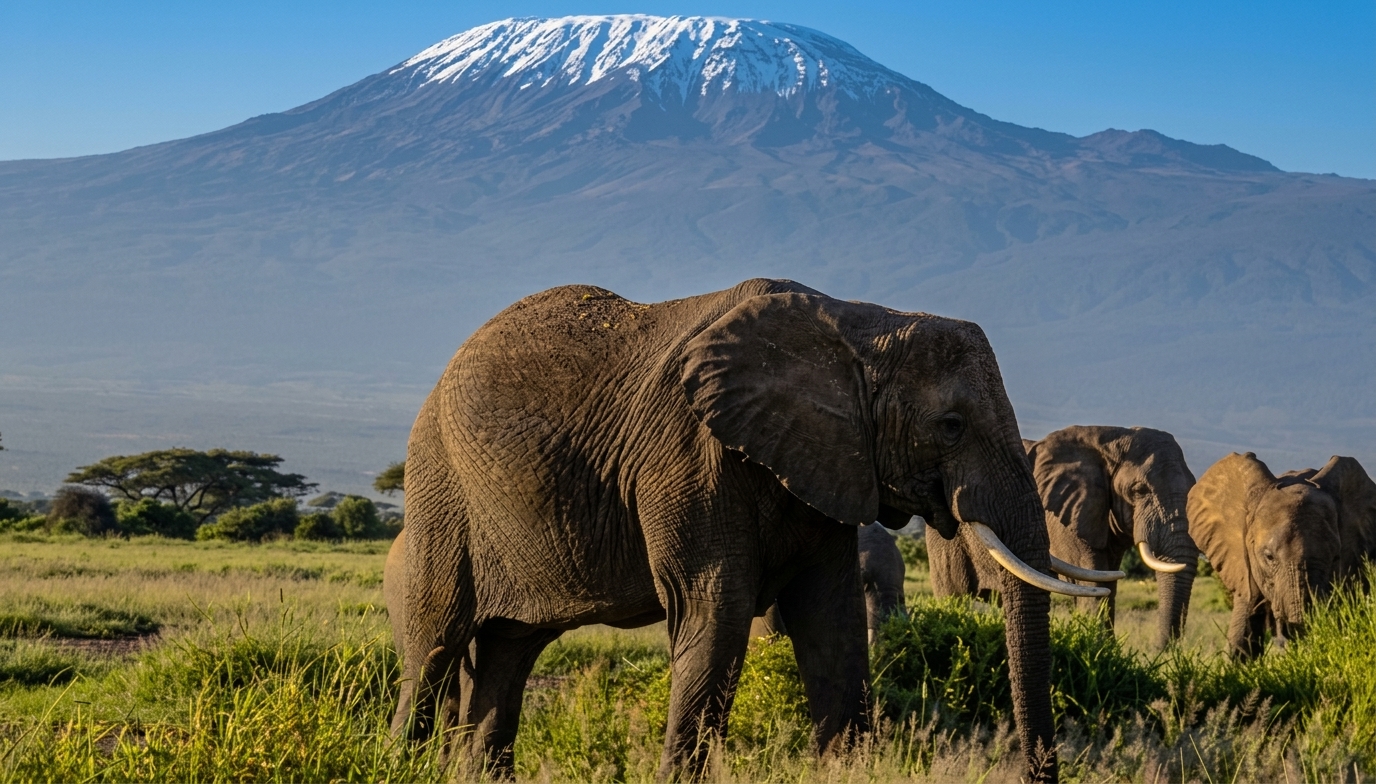
Included full-day safari in Tarangire National Park — famous for its elephant herds, baobab trees and wildlife along the Tarangire River. During the week your group also tours Arusha, the Natural History Museum, the Cultural Heritage Centre, the Chagga caves and the Materuni Waterfalls coffee experience.
This itinerary is a sample and may change based on community needs, weather, and logistics.
Day 1 · Saturday
Arrive at Kilimanjaro International Airport (JRO). A MEDLIFE staff member will greet you and transport the group from Kilimanjaro to the hotel. Settle in and recover from the long travel day.
Day 2 · Sunday
After breakfast, gather for the official welcome meeting to prepare for the week ahead. Then embark on a panoramic tour of Arusha and visit the Natural History Museum in the Old German Boma — an intriguing blend of history, environment and culture tracing the development of humankind, German colonialism in Tanganyika and the region's diverse ethnic groups. After lunch at a local restaurant, spend the afternoon at the Cultural Heritage Centre, one of the largest collections of shops and galleries in East Africa, showcasing renowned artists from across the continent. Finally, drive back to your lodging in Moshi with a stop for dinner on the way (not included).
Day 3 · Monday
Embark on a Tanzania Reality Tour to become acquainted with the region's geographical, political and social reality. In the morning, visit the Chagga caves and learn about their historical significance and role in local culture. Throughout the tour, visit several Kilimanjaro districts and examine the relationship between poverty and education. Tonight, head out to dinner as a group — in the evening, a local artist guide comes to the hotel to lead a traditional painting activity. Be ready to get creative!
Day 4-5 · Tuesday & Wednesday
Mobile Clinics are held in a different community each day. MEDLIFE works with Kikavu Chini, Rundagai, Kilimamswaki and Kirua — rural villages 45-60 minutes from the hotel, furthest from Mount Kilimanjaro and lacking access to running water or electricity. Upon arrival, participants set up each station by raising tents, helping doctors and nurses prepare their workspaces and stocking the pharmacy. Patients visit triage, where volunteers assist with vitals, listen to nurses at the education station, then see a primary care doctor and receive medicine from the pharmacy free of charge. After each clinic day, return to the hotel with 1-2 hours of free time before dinner; pre-dinner meetings and presentations are held some days. Following dinner, guest speakers and storytellers share the arts, folklore and legends of the Kilimanjaro region around the fireplace.
Day 6 · Thursday
This morning, after breakfast, start with the Materuni Waterfalls and Coffee Experience. Enjoy the stunning natural beauty of the waterfalls and participate in an immersive coffee-making session showcasing the local way of life and cultivation techniques. After a delicious lunch in the Chagga community, hold a discussion focused on community development. You'll then have the chance to purchase your own personally ground coffee as a souvenir while supporting the community! After a long day, relax after dinner at the hotel and enjoy a documentary movie night.
Day 7 · Friday
During the week, you may have the opportunity to assist in the construction of a community Development Project such as a library, school bathroom renovations or school painting projects — projects vary depending on community needs. Return to the hotel after the project for quick showers and getting ready to go out to dinner in Moshi. You'll have some reflection time to share experiences from the week and what you're taking home with you!
Day 8 · Saturday
Enjoy a full-day safari in Tarangire National Park, famous for its large elephant herds, ancient baobab trees and diverse wildlife along the Tarangire River. Following your immersive tour of the park, you'll be comfortably transported back to either Moshi or Arusha in the afternoon, where dinner will await you at the hotel.
Day 9 · Sunday
As you bid farewell to the Kilimanjaro region, carry with you not only the souvenirs you've collected but also the intangible treasures of newfound friendships and a deeper appreciation for the natural and cultural wonders of Tanzania. Step onto your return flight with a heart full of gratitude for the experiences you've had, the people you've met and the memories you've made.
Quick check 1 of 3
Which activity happens on Day 2, before the mobile clinics start?
Mobile clinic
Stations may vary with community needs and group size. Patients return to Education between specialists, and Pharmacy is always last.
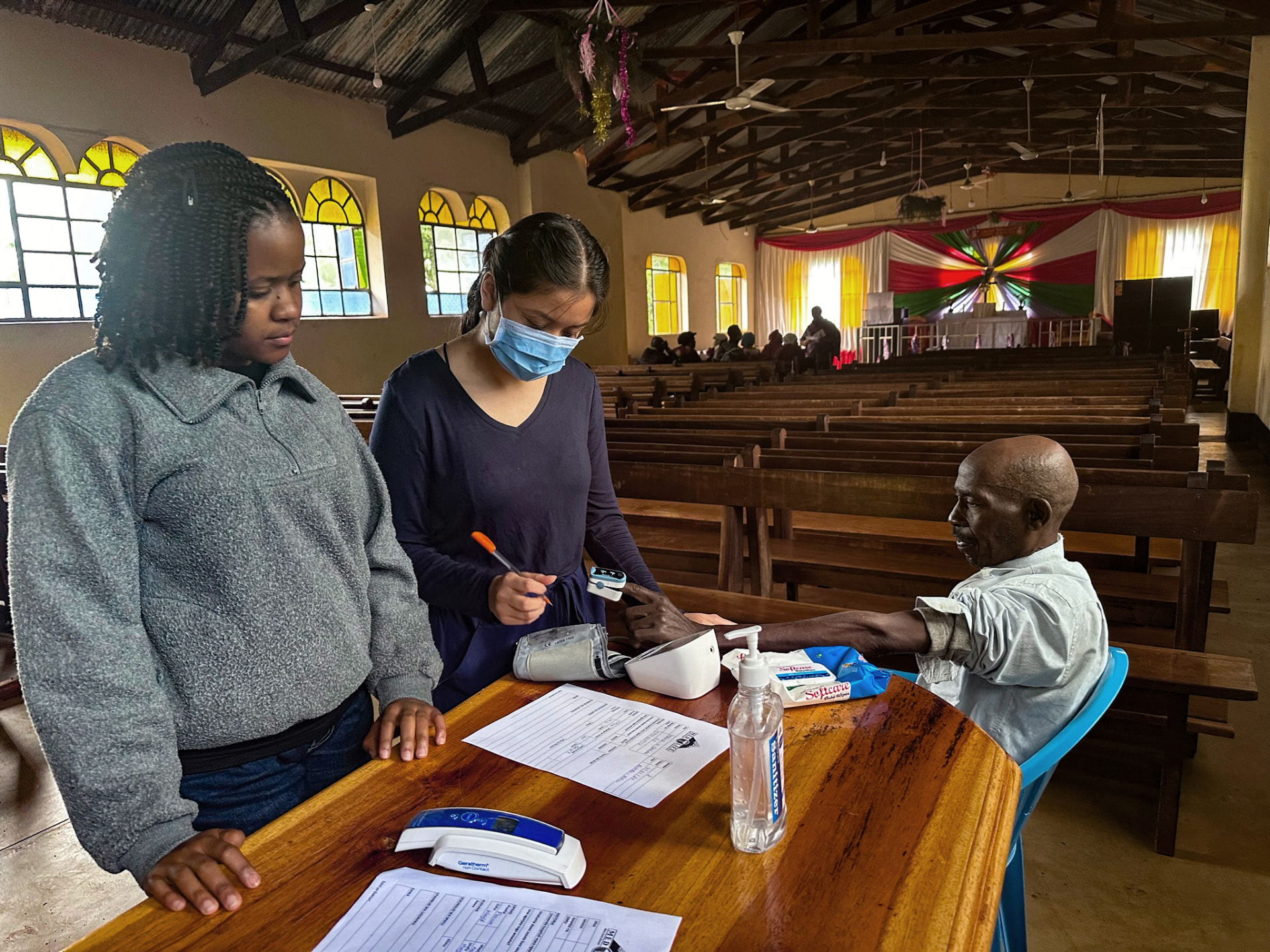
The Triage Station is where we obtain the patients' contact information, basic medical history, and other data for the physicians to use during their consultations.
| English | Swahili |
|---|---|
| Open your mouth wide | Fungua mdomo |
| Stand up straight | Simama sawa |
| I'm going to measure your height | Nina kupima urefu wako |
| I'm going to take your blood pressure | Nina kupima presha |
| I'm going to take/measure your weight | Nina kupima uzito wako |
| Take off your shoes/sweater | Vua viatu vyako/sweta |
| Lift the sleeve of your sweater | Nyanyua nguo yako |
| You're going to feel a bit of pressure on your arm | Utasikia presha kwenye mkono wako |
| Get on the scale with/without your baby | Panda juu ya mizani na/ bila mtoto wako |
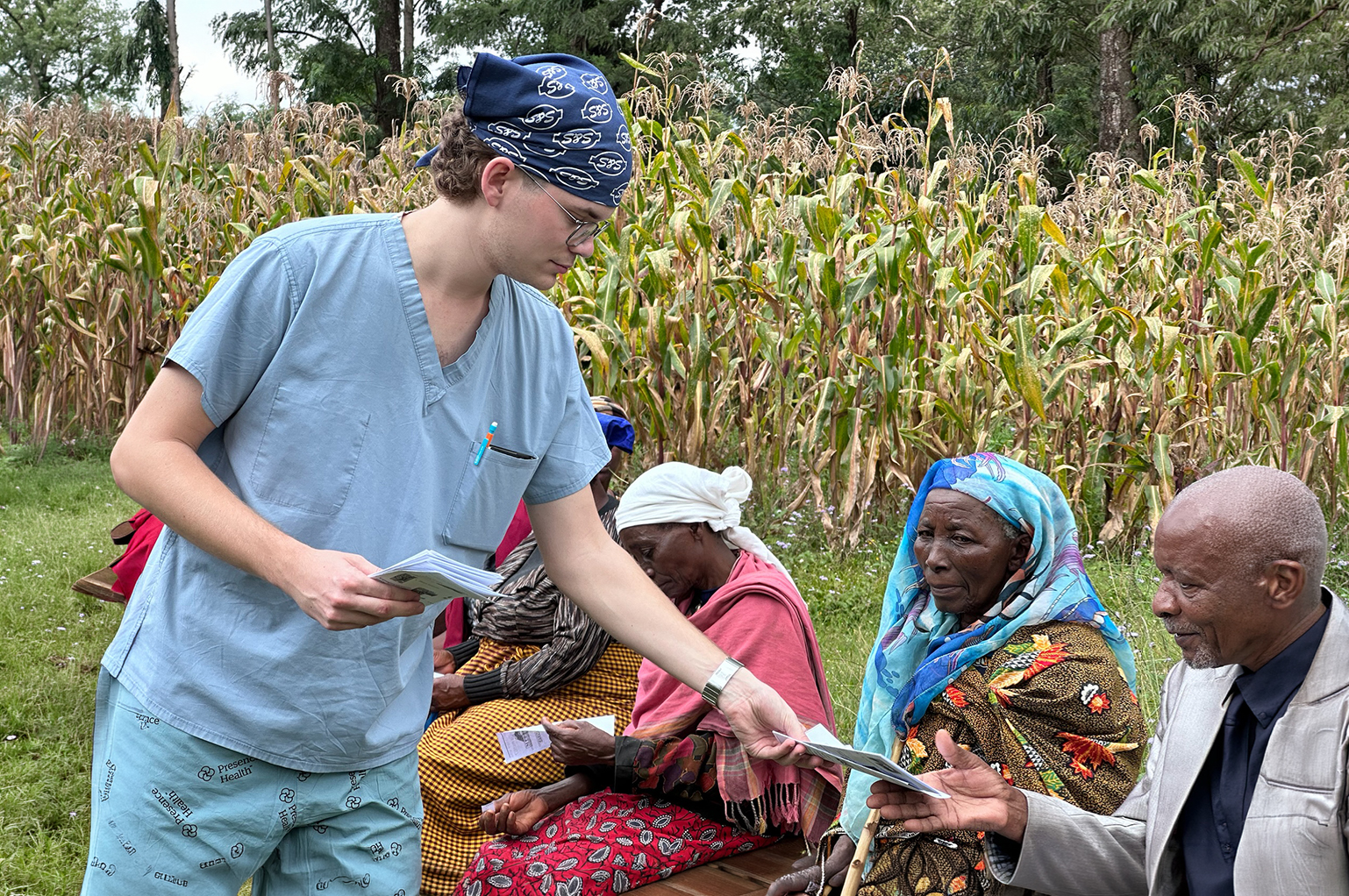
The Education Station is a space to provide health education to everyone before the clinic begins. Education is given on topics such as clean drinking water, diabetes, high blood pressure, cervical & breast cancer, and nutrition.
| English | Swahili |
|---|---|
| Have a leaflet | Chukua kipeperushi |
| We will start with an information session | Tuta anza na dondo za habari |
| This one is about… (water, nutrition, diabetes, cancer) | Hii ni kuhusu… (maji, lishe, kisukari na saratani) |
| The nurse will start talking soon | Muuguzi ata anza hivi karibuni |
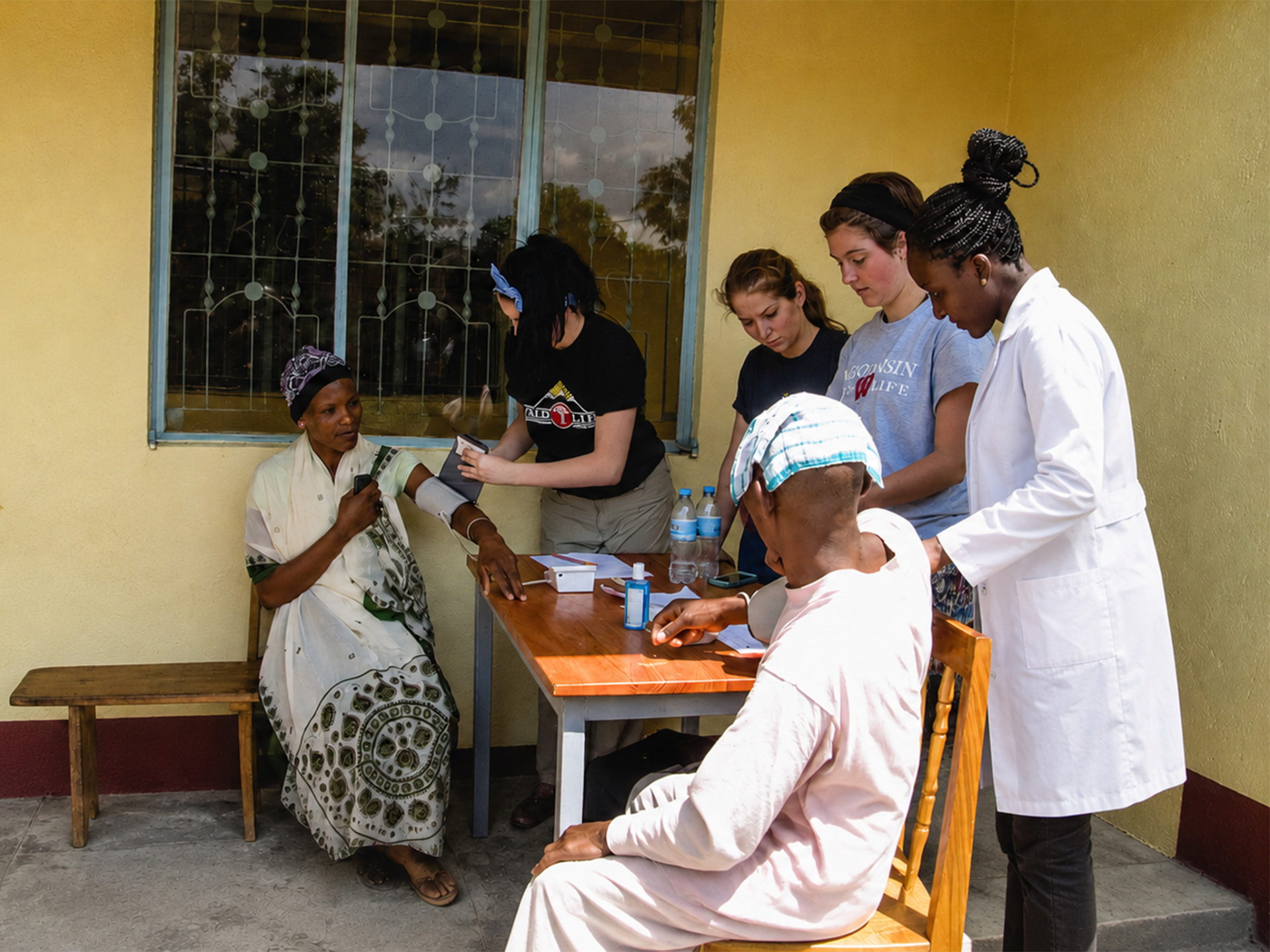
The General Medicine Station is the major station where doctors address individual medical issues and identify patients who require follow-up care.
| English | Swahili |
|---|---|
| Open your mouth and stick out your tongue | Fungua mdomo wako na utoe ulimi nje |
| Follow me please | Nifuate tafadhali |
| Go to the pharmacy for your medicine | Nenda kachukue dawa zako duka la dawa |
| Go back to the education tent for the next station | Rudi kwenye hema la elimu na subiri maelekezo |
| The doctor will choose the best treatment | Daktari atakuchagulia tiba bora |
| Wait a moment | Subiri kidogo |
The Eye Doctor Station gives patients an opportunity to have their vision tested and, if needed, to obtain glasses.
| English | Swahili |
|---|---|
| The Eye Doctor will see you now | Daktari wa macho atakuona hivi karibuni |
| Take a seat | Keti hapa |
| Here are your glasses | Chukua miwani |
| Put them in a case so they don't get broken | Weka kwenye kipochi isivunjike |
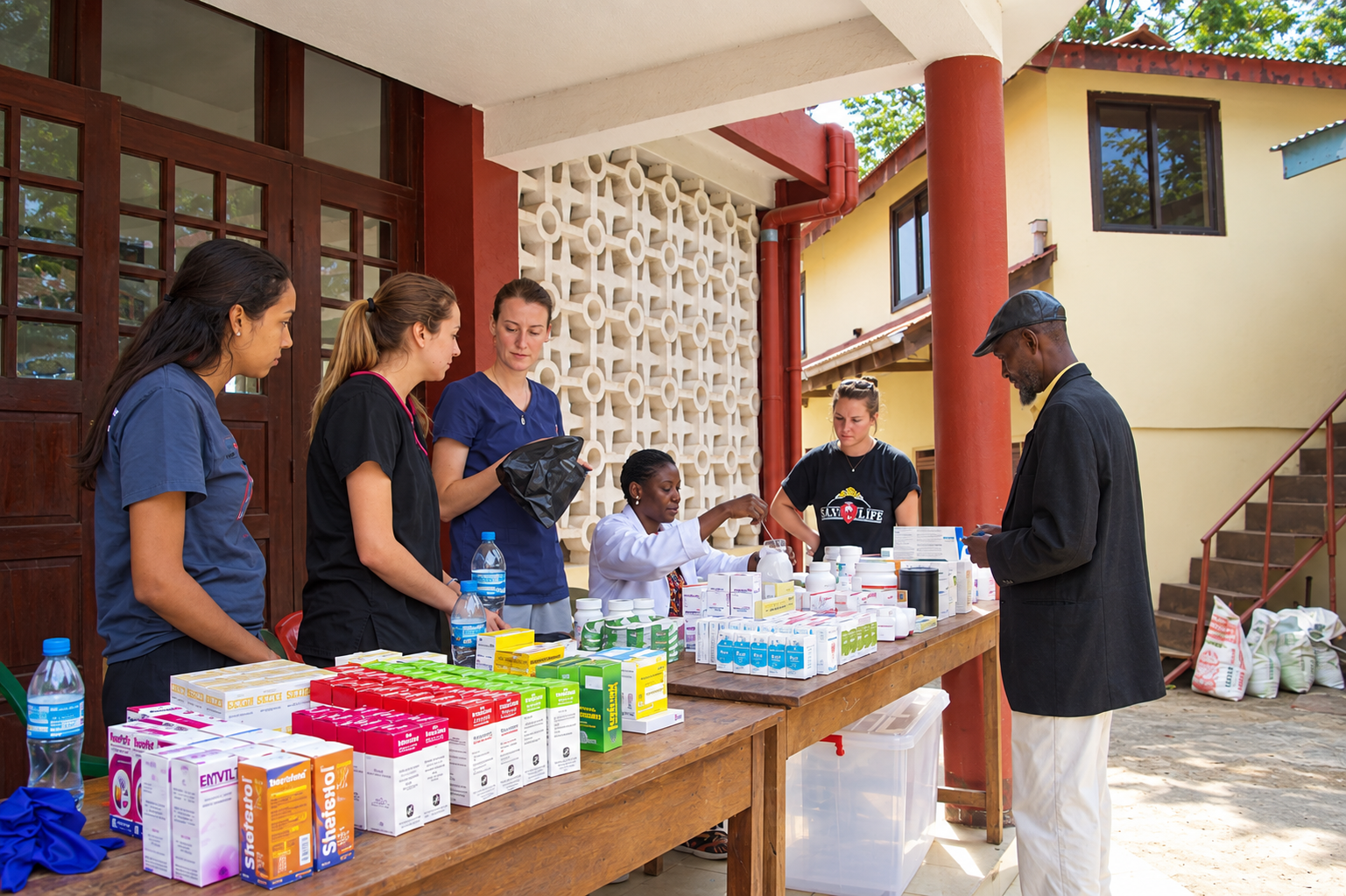
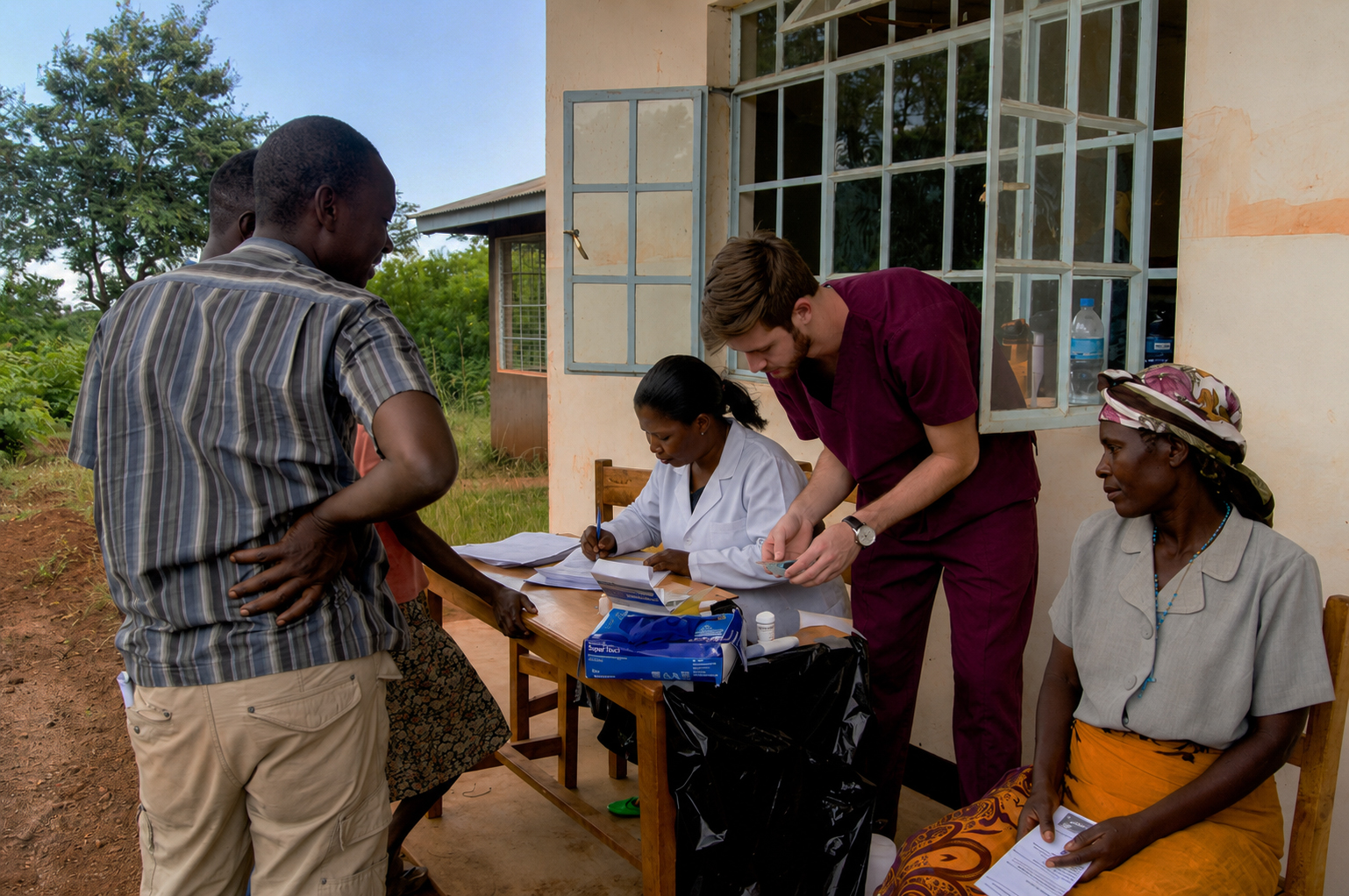
After the patient has visited every station indicated on their medical history form, they are directed to the Pharmacy Station to fill their prescription(s). We collect data here on the quantity prescribed and received, and collect the history forms to enroll patients into MEDLIFE's follow-up program.
| English | Swahili |
|---|---|
| Give me your prescription and form | Nipe karatasi yako ya dawa na fomu |
| I'm going to prepare your medicine | Nakuandalia dawa zako |
| Take your medicine | Kuchukua dawa zako |
| Take with food/water | Tumia na chakula/maji |
| We will keep the forms | Tunabaki na fomu |
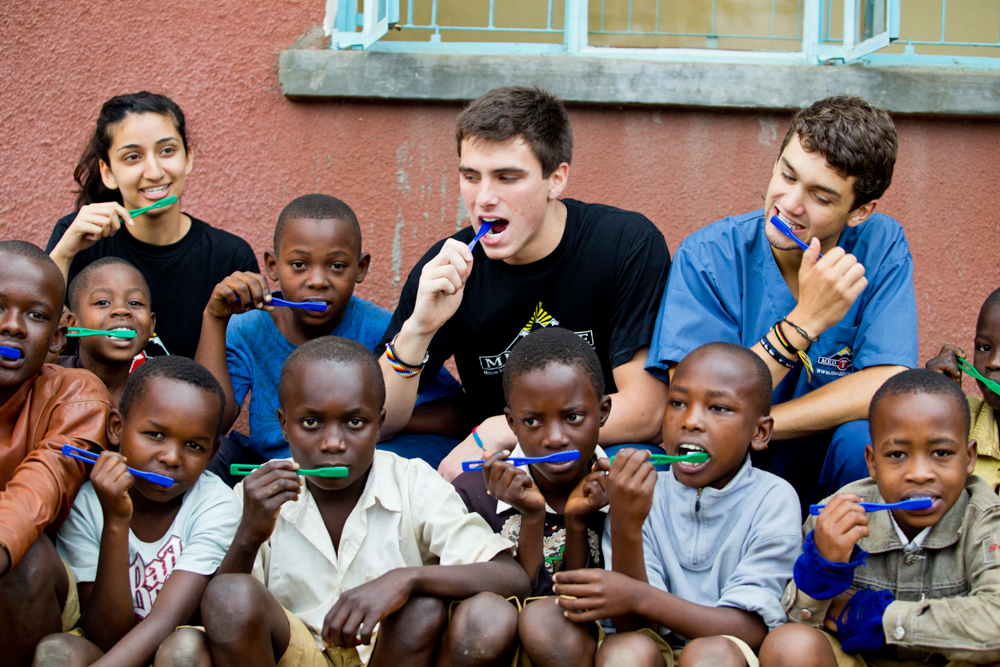
The goal of this station is to educate children about dental hygiene. It is for children only, and children do not need a medical history form to participate. This is the only station without a medical professional, so be proactive about setting up and running it.
| English | Swahili |
|---|---|
| Everyone take a toothbrush and cup | Kila mtu achukue mswaki na kikombe |
| Now copy what I do | Sasa fanya kama mimi |
| Brush all of your teeth in a circular motion | Sugua meno yako katika mzunguko |
| Don't eat or drink anything for an hour | Usile au kunywa kitu chochote kwa muda wa lisaa |
| Rinse your mouth | Sukutua |
| Spit out here / there | Tema hapa |
| Wash your toothbrush | Safisha mswaki wako |
Quick check 1 of 3
Where does a patient go first when they arrive at the mobile clinic?
Conduct & health
Beyond local laws and regulations, masks must be worn during Mobile Clinics.
Upon arrival, all students attend an extensive safety briefing.
If you feel unwell or show symptoms of any illness, advise your Trip Leader immediately so you can get medical care.
Hand-washing stations and hand sanitizer are available at every Mobile Clinic.
Students participating in a High School SLT are required to remain with their assigned chaperone or Trip Leader at all times throughout the program. This applies to all circumstances, including leaving the hotel or separating from the group during fieldwork, regardless of the reason.
This policy exists to ensure student safety and reflects the expectations agreed upon with parents/guardians prior to departure.
Non-compliance with this policy may result in modified participation in program activities, as determined necessary to protect the safety and wellbeing of the student and the broader group.
Quick check 1 of 3
Before taking a photo of a patient or community member, you should:
Chaperones
A quick reference for the adults who travel with our student groups. Tap any card to expand the details. Please refer to your MEDLIFE HQ Rep for a detailed version of the ‘Revised HS Chaperone Summary of Requirements & Participation Agreement 2026-2027.
Joining a Service Learning Trip with MEDLIFE is both an educational and rewarding experience. As a Chaperone, you support both MEDLIFE and the student experience while on the trip. Chaperones act as a familiar face to students as they explore a new country and culture — your presence provides support and reassurance during international travel. For every 6 students, one Chaperone's Service Learning Trip donation goal is free (additional/optional tour activities not included). One Chaperone may be responsible for up to 10 students. All chaperones are determined well in advance of the trip. Please note there is a required application, interview, criminal record background check, and approval by MEDLIFE HQ prior to proceeding with involvement in Chaperone meetings, assigned responsibilities, and discount codes provided. Adult trip participants choosing to travel alongside their children - and not having competed the process above - are welcome to enjoy the trip, but must be noted as “Parent Participants” or “Teacher Participants” and are not referred to as official chaperones of the trip. In this case, the adult participant is required to reach the full donation goal to attend the trip, and a room upgrade is mandatory.
Preparing
A short checklist so you arrive confident, covered and connected before the clinic doors open.
Be sure to confirm any required visas or fees involved in your flight layover based on airport as well.
The attendees of the SLT are responsible for buying their own airfare. However, our team can help you in this process by providing a flight quote for your group. You can request a flight quote by emailing info@medlifemovement.org. Once your flight is booked, please make sure to add your arrival and departure information to your booking.
Airport: Kilimanjaro International Airport (JRO), Tanzania
Kilimanjaro, Tanzania — recommended timeframes
Arrival: Saturday, into Kilimanjaro International Airport (JRO).
Departure: Saturday, Sunday, or Monday between 12:00 PM and 6:00 PM — depending on whether you take an optional full-day or 2-day safari extension.
If attendees arrive outside of the set time frames, they will be responsible for covering the cost of transportation to their site. If your flight arrives outside the timeframes listed please email info@medlifemovement.org. Remember that any additional nights and transfers that are added before/after your trip because of early or late arrival are not included in the Service Learning Trip donation goal, and will be at the cost of the student.
We highly recommend purchasing trip cancellation insurance, which will allow you to cancel for any reason. You can contact info@medlifemovement.org for more information about our insurance options.
Note that this type of insurance must be purchased within a short number of days of your initial registration, and cannot be added in the days leading up to your departure — reach out as soon as possible to access this opportunity.
A MEDLIFE Representative stays at your accommodation for the duration of the trip. Accommodation details are shared with your group in the WhatsApp group before departure.
Summer weather is hot and sunny at about 84ºF (29ºC); the rainy season (March–June) is cloudy and around 60ºF (15ºC) with heavy rains, so pack a raincoat and waterproof shoes. Tanzania is close to the equator — strong UV protection is recommended. Women are asked to wear clothing that does not reveal knees or shoulders, and to avoid tight clothes, to respect the local culture. During the dry season Moshi can be very dusty — anyone with respiratory issues should bring a scarf or buff. Bring warm clothes for chilly nights, books and games (**the hotel is isolated** and wifi can be unreliable), and cash, as **many establishments do not accept credit cards** — US bills must be printed in 2013 or newer.
Many families travel hours to reach our clinics. Donations are handed directly to community members and stations — bring what you can, packed in your checked luggage.
About 3–4 weeks before your trip, MEDLIFE adds you to a WhatsApp group with your Trip Leader and fellow students. It's where we share daily logistics, meeting points, weather notes, and reminders.
If you have not received a WhatsApp invitation at least 2 weeks before your departure, email info@medlifemovement.org with your name and trip dates so we can add you right away.
info@medlifemovement.orgA short message from the MEDLIFE team to wrap up your pre-departure training.
Quick check 1 of 3
You haven't received your trip WhatsApp group invite two weeks before departure. What do you do?
Optional extras
Extend your trip before or after your SLT with your friends, chapter, or family, or add a SUNDAY experience on DAY 9, in the event of Sunday night flight departures. These trips are offered through Good Life Expeditions, a MEDLIFE partner travel agency whose profits support MEDLIFE projects in the communities we work alongside.
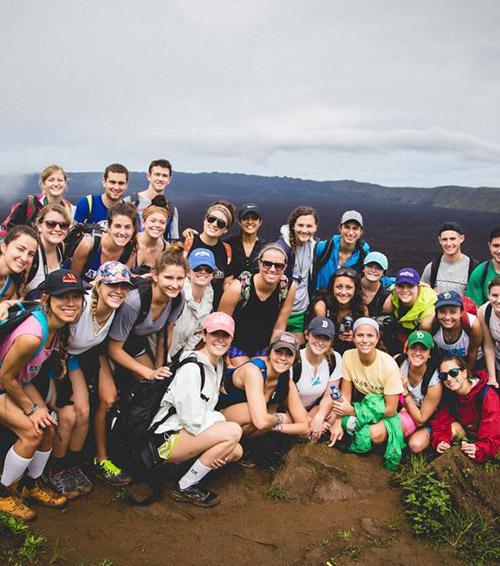
Enjoy a peaceful swim in Rundugai Hot Springs, and visit the majestic Ngorongoro Crater, one of Africa's “7 Natural Wonders”.
Starts at $795.00 per participant. Available before or after your SLT.
Interested? Email info@medlifemovement.org or meet with a Good Life Expeditions advisor to add one of these to your trip.
High school students, families:
Book a meetingOUR PROTOCOLS
Save these numbers before you fly. If MEDLIFE staff aren't nearby, call or WhatsApp the Tanzania emergency line.
In destination or in transit
Tanzania Emergency Phone · WhatsApp, call or SMS
Calling from North America
MEDLIFE HQ Phone
Police / Fire / Medical Emergency
112Police (Moshi)
+255 27 2755055Kilimanjaro Christian Medical Centre
+255 27 2750748Kilimanjaro Christian Medical Centre
Main referral hospital for the Moshi area
+255 27 2750748Police Station (Moshi)
Moshi, Kilimanjaro Region
+255 27 2755055Trawick International (insurance)
Inside USA: 833-425-5101 · MEDLIFE staff can assist with claims in-destination
+1 603 952 2686Embassy of the United States (Dar es Salaam)
686 Old Bagamoyo Road, Msasani, Dar es Salaam, Tanzania
+255 22 229 4000Canadian Embassy (Dar es Salaam)
26 Garden Avenue / 38 Mirambo Street, Dar es Salaam, Tanzania
+255 22 216 3300British High Commission (Dar es Salaam)
Umoja House, Hamburg Avenue, Dar es Salaam, Tanzania
+255 22 229 0000Emergency medical and evacuation insurance up to $250,000 USD with a $250 USD deductible once on a trip.
A doctor's visit to your hotel can be arranged if you feel unwell — typically $50–$100 USD, usually less than the $250 deductible. Staff or hotel reception can coordinate.
Bring $250 USD in cash beyond your spending money to cover the deductible, plus a credit card for emergencies if you have one.
Trawick International · 833-425-5101 (inside USA) · 603-952-2686 (outside USA)
Quick check 1 of 3
In an emergency during the trip, who do you contact first?
After your trip
Take your experiences from the field and put them into action at home through MEDLIFE activities all year round.
Our fundraising campaign supporting day-to-day work in medicine, education and development. MEDLIFErs run Power Hours inviting contacts to donate — often with wild fundraising challenges.
Refer friends at other schools to start a MEDLIFE Chapter, encourage others to travel on a Service Learning Trip, and recruit new members for your Chapter.
Volunteer locally with your Chapter, run for an E-Board position, or become a MEDLIFE Ambassador or Active Member to unlock discounts on your next trip.
Follow us on social media and the blog, send photos and stories to media@medlifemovement.org, and tag us when you share what you saw.
Discover more of MEDLIFE